


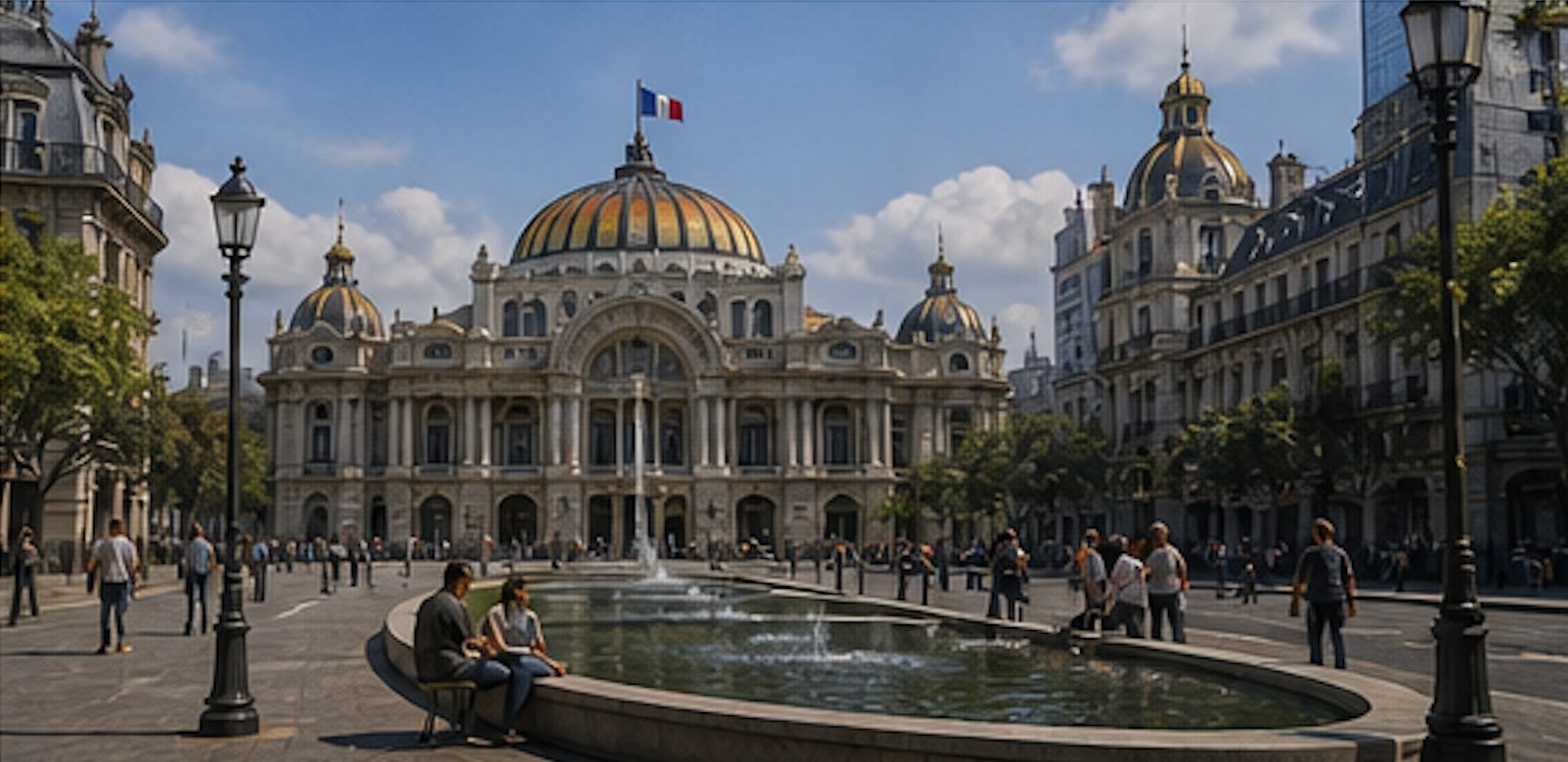
Every day when I wake up, it’s the same thought.
What do I have to do today? What do I have to do different? How am I gonna be better? How do I make everyone around me better? How do I make them believe?
What can I give people of myself that is true — honest — something that actually inspires?
Well… today is not that day.
Today, I’m choosing violence.
You already saw it. It’s in the title.
Happy Mexican Independence Day.
Yeah. I know.
It’s Cinco de Mayo.
And some of you are already lining up to correct me — that’s not independence, that’s the Battle of Puebla.
Listen to me.
Here’s the take: Cinco de Mayo matters more than you’ve been taught to believe.
And a lot of Mexicans — especially the ones who think they know better — love to downplay it as just some random battle in a town in Puebla.
I don’t.
Now let’s be clear.
The War of Independence starts September 16th, 1810. The Grito de Dolores. Hidalgo. All of that.
But independence didn’t just happen that day.
It dragged. It fractured. It changed hands.
It wasn’t formally completed until September 27th, 1821. And even then, it took years to be fully recognized.
That story is messy. Betrayals. Power shifts. A priest stripped of his priesthood and executed less than a year into the revolt. All of it matters.
But this — this isn’t about that.
Because Mexican independence isn’t just about Mexico.
Stay with me.
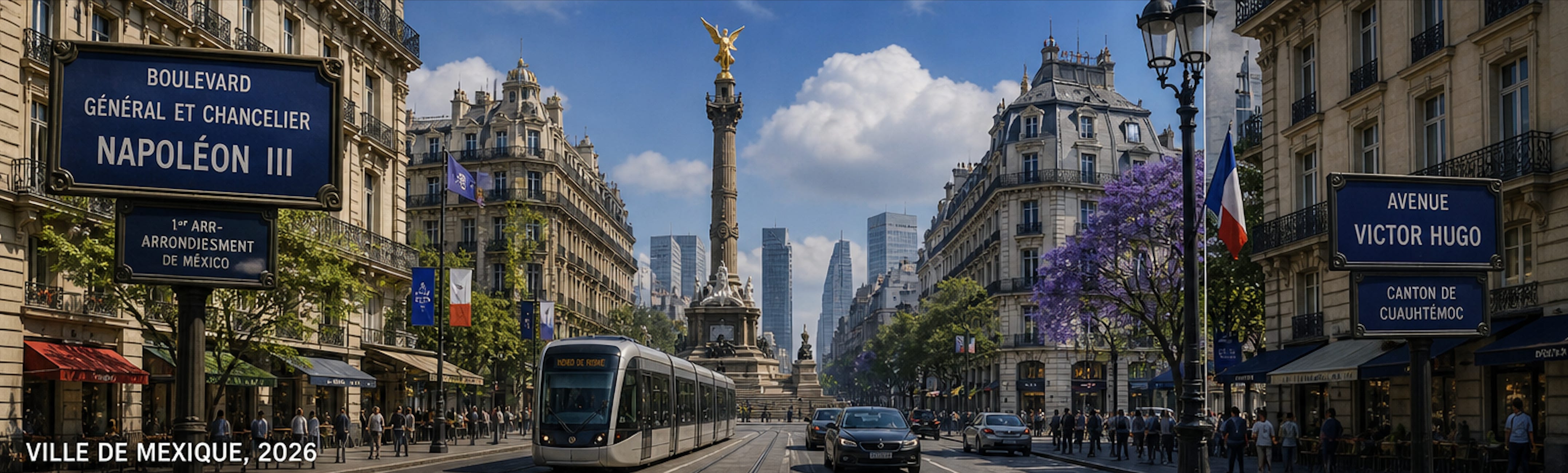
The year is 2026.
You arrive from your international destination at Charles de Lorencez International Airport, in a city simply known as Ville de Maximilien.
What we know as Mexico City.
You step outside.
Renaults. Peugeots. Everywhere. Every Uber some version of it. But you choose the light rail instead; cleaner, faster, more efficient. It just works.
You head into a neighborhood now known as Nord de Rome.
Still colorful. Still historic.
But the signs — all in French.
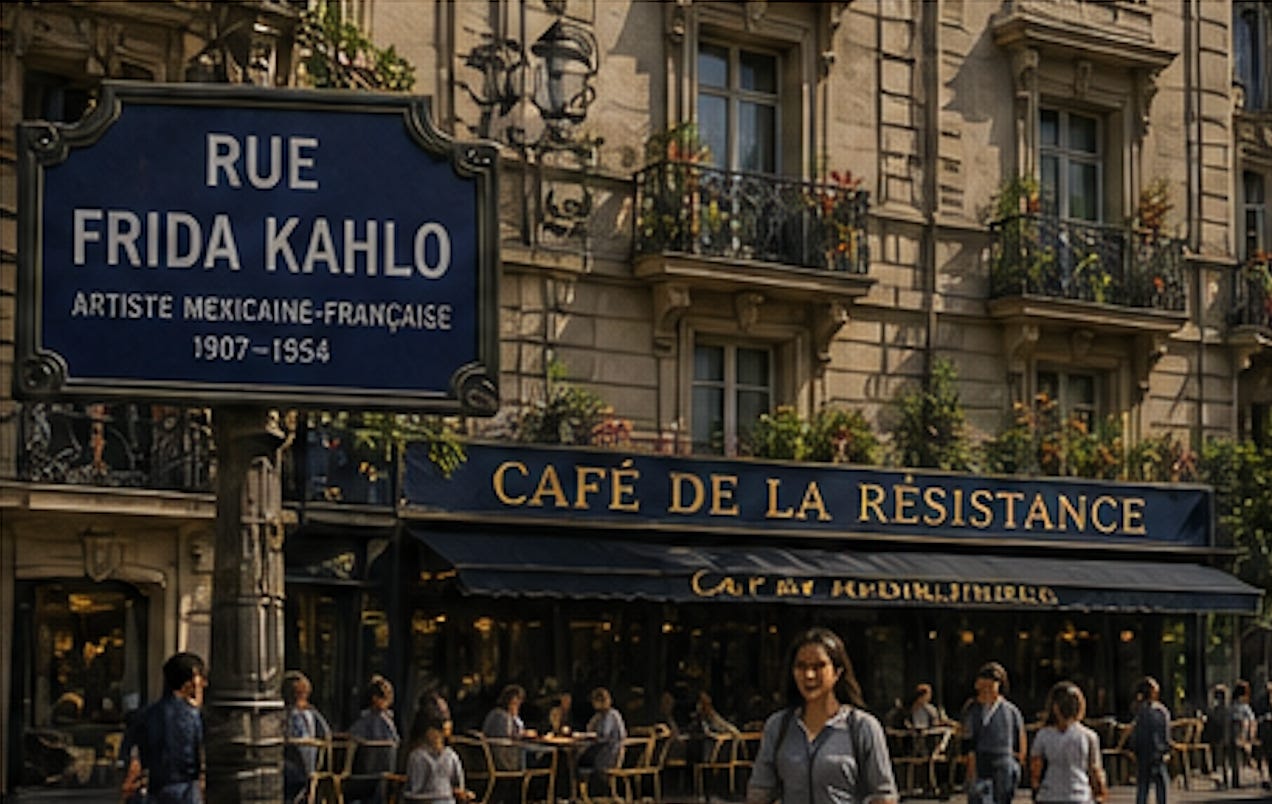
Street names. Monuments. Cafés.
All paying homage to French-Mexican figures that don’t exist in our reality.
But they do here.
Musicians. Artists. Poets. Generals.
The main avenue — what we know as Paseo de la Reforma — is now General and Supreme Chancellor Napoleon III Boulevard.
That’s the reality.You hear it in the language.
French first. Then English.
And somewhere underneath — what’s left of Spanish.
Not gone.
But no longer dominant.
You notice it in the people.
Brown faces. Speaking French. Fluently. Comfortably. Like it’s always been theirs.
And then, occasionally — you hear something older.
Fragments of Zapotec. Mixtec. Nahuatl.
Held onto. Protected.
Almost like resistance.
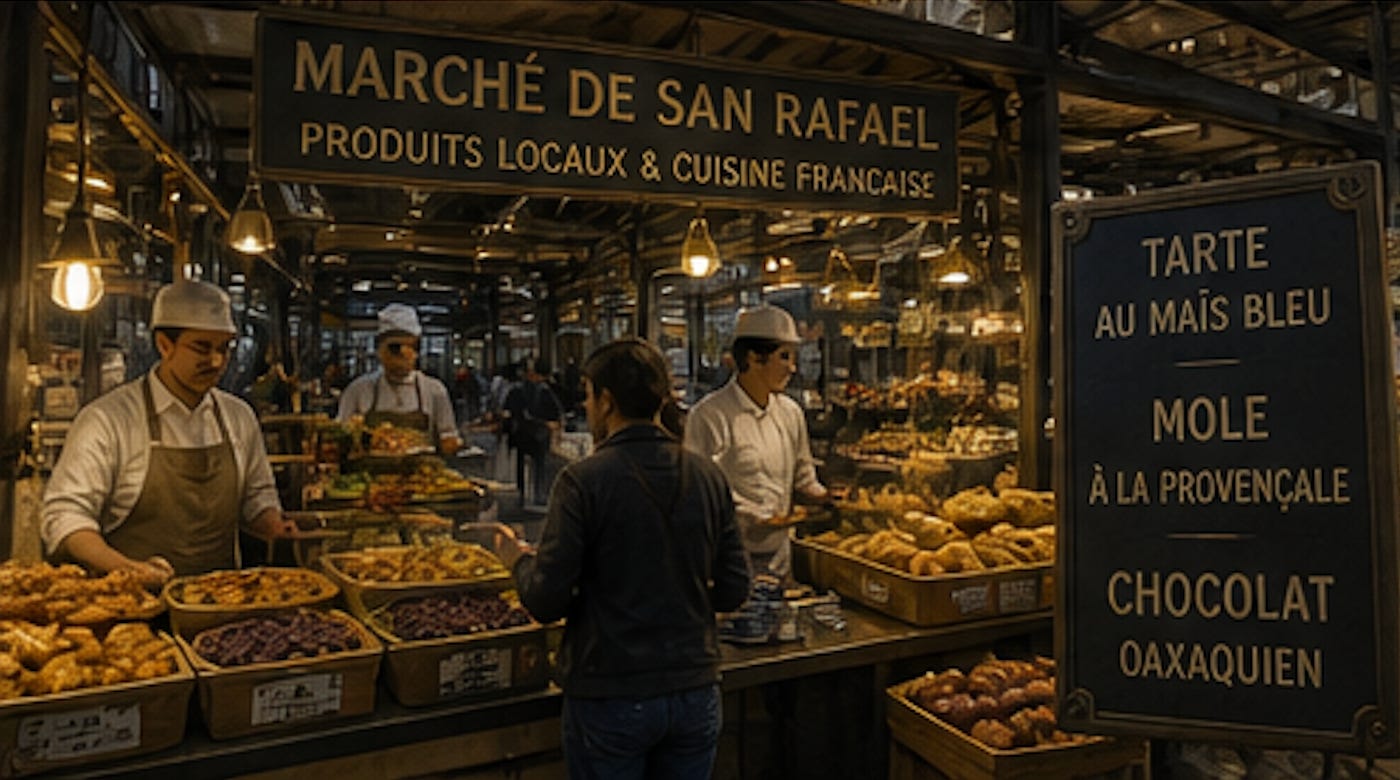
The food tells you everything.
The stalls are still there — but they’re different.
Techniques shifted. Ingredients replaced. Flavors refined into something else.
Something French.
Something… not quite right.
The city itself; it feels like someone took Paris, blended it with Lyon, and laid it over what used to be Mexico City.
Less smog. Cleaner air. More symmetry. More control.
And somehow — a lot less soul.
Still impressive. Still beautiful. Still one of the culinary capitals of the world.
But now — unquestionably — a capital of French cuisine.
With traces of something older still trying to survive underneath.
And here’s where some of you might say: that doesn’t sound that bad. France, Lyon, and a version of Mexico City all in one? I’ll take it.
Not quite, my friends.
Because here’s the part of the story we don’t talk about enough:
If the Mexicans don’t defeat the French at Puebla, there’s a real possibility the French come up to this country. Align with the Confederacy. Help defeat the North. And then — keep going. South. Through Latin America.
That’s what was on the table.
That’s the reason we got stuck with Maximilian for two years.
Now — and I’m gonna catch shit for this, but somebody has to say it — that part wasn’t all bad. The real reason Mexican cuisine is what it is today? A lot of it traces back to the French intervention. When Maximilian and Carlota arrived, the food started to change.
Pan dulce. Bolillos. Birotes. Pork confit. Technique after technique that’s now baked into the spine of Mexican cuisine — that came from this period.
And you can make the case that so much of what we love about Mexican food evolved because of others — Jews, Moors, Italians, Chinese, Japanese, Germans. That’s what made this country great.
But none of it happens without the French.
So here’s where I’m going with all this. Stay with me.
The Grito de Dolores, September 16th, 1810 — important. Of course it is.
But Mexican independence isn’t just about Mexico.
It is the true breaking of New Spain.
Mexico shares Independence Day with Guatemala. El Salvador. Nicaragua. Honduras. Costa Rica. Because they’re all tied to the same fracture.
By the time you got to 1862, this country — this idea of Mexico — was still fragile. Still forming. The same way the rest of Latin America was still forming.
And then France showed up.
They didn’t show up to visit. They showed up to take it.
Not just Mexico. Influence across all of Latin America.
And if that moment goes differently — if Puebla falls the way it was supposed to — everything changes.
There’s no version of Mexico as you understand it today.
And all of those countries — the ones that share that independence — you really think they keep it?
Absolutely not.
So this is not just about a battle.
This is about independence.
Cinco de Mayo should be celebrated not just as an extension of Mexican Independence Day — but as independence for the rest of the nations in Latin America.
If you’re Guatemalan, Salvadoran, Honduran, Nicaraguan, Costa Rican; crack a fucking beer open.
This is the one day I’ll give you permission to take shots of tequila, drink all of the margaritas, and eat all the tacos. This one is for you, too.
That’s why this matters.
Somehow, somewhere along the way, we decided this part of the story wasn’t worth taking seriously. Or worse — we turned it into a punchline. Cheap drinks. Bad sombreros. Surface-level pride with no memory attached to it.
And the worst part? The way we correct each other.
Mexicans. Mexican-Americans. So quick to say that’s not what this really is — without really understanding what it is.
Listen.
Today is worth celebrating.
But if you’re going to celebrate something, at least understand what almost didn’t make it.
Celebrate the fact that we get to celebrate Cinco de Mayo. Because in another version — you don’t.
In that version, you celebrate the liberation of Mexico by way of France.
Decades later, if at all, ou celebrate the birth of a French empire in what is now Latin America.
You order a croissant on Napoleon III Boulevard and you call it home.
That’s what was on the line on May 5th, 1862.
A smaller army. Outgunned. Outsupplied. And outlasted the greatest army in the world. All, while holding the line along those hills of Loreto and Guadalupe.
And because of them — there’s still a here.
So today, raise a glass.
To Zaragoza. To the soldiers. To the line that held.
To every Mexican, every Central American, every Latino who exists because of what happened that day.
Happy Cinco de Mayo.
Happy Independence Day.