


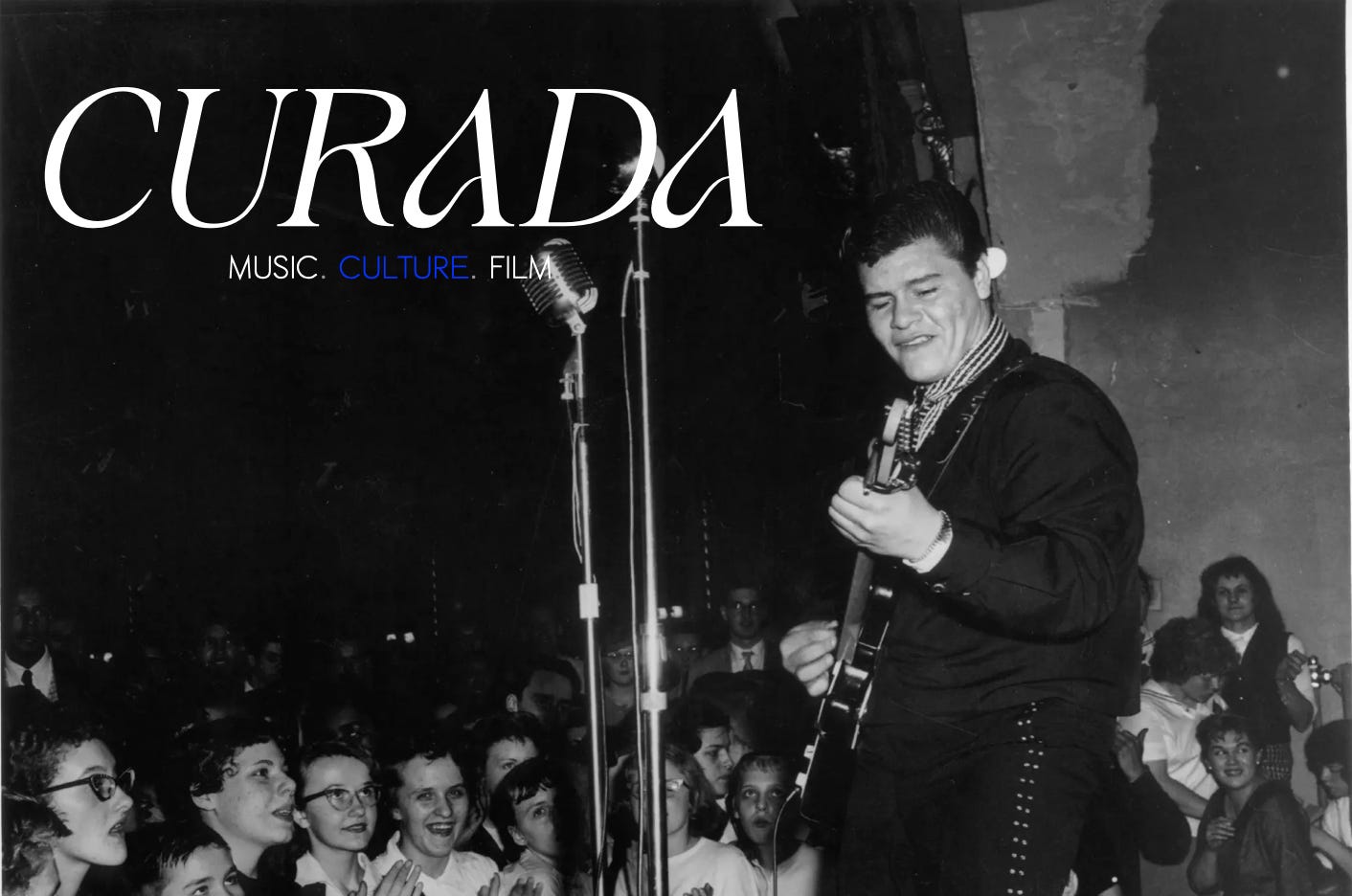
This is one I’ve always wanted to write.
Thanks for reading CURADA! Subscribe for free to receive new posts and support my work.
If you grew up in a Mexican-American household; in that constant, unresolved hyphen between two worlds — then you understand the negotiation. Not the dramatic kind. The quiet, daily kind. The calculation you run before you open your mouth, before you choose a song, before you decide which version of yourself to bring into the room. What is Mexican? What is American? Where exactly do I stand? These aren’t abstract questions. They’re the architecture of a life.
You grow up listening to what your parents play. If you’re lucky, you inherit the giants — José José, Juan Gabriel — heartbreak elevated to high art. You absorb regional music: corridos, boleros, cumbias, whatever’s coming from the speakers at the carne asada. And then, somewhere in adolescence, American radio slips in. Doo-wop. R&B. The early seismic rumble of rock and roll. The two worlds don’t fight each other. They just stack, layer after layer, until you’re not sure where one ends and the other begins.
And then one day, someone puts on La Bamba.
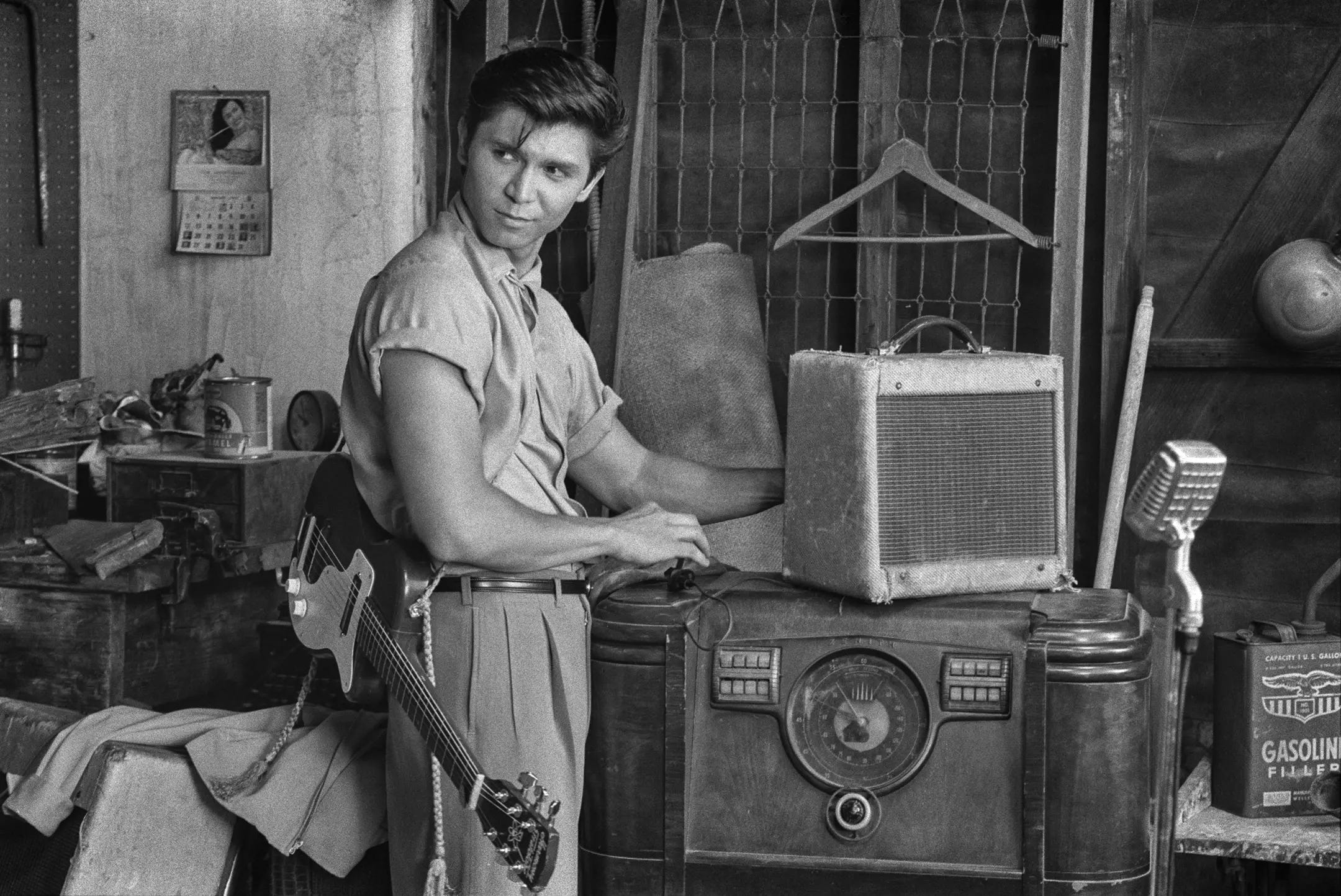
Not the song. The film. Starring Lou Diamond Phillips. If you grew up Mexican-American, you watched it — it wasn’t optional. For many of us, it was the first time we saw ourselves centered on screen. Not as background. Not as punchline. A brown kid from a working-class family in Pacoima, California, with ambition bigger than his zip code, a guitar in his hands, and a story worth telling.
That kid was Richard Steven Valenzuela — who became Ritchie Valens — who rose from backyard performances to sharing stages with Buddy Holly, only to board a small chartered plane in Clear Lake, Iowa on February 3, 1959, and never come back. He was seventeen years old. Calling him a young man feels dishonest. He was a boy.
The Film — and the Truth Beneath It
As I’ve gotten older, my relationship with the film has grown complicated. It’s emotionally powerful — it captures hunger, family tension, the specific weight of immigrant aspiration. But it also simplifies him. It distills a life into three songs and a tragedy: “Come On, Let’s Go,” “Donna,” “La Bamba.” That’s what most people know. That’s what most people carry.
But go deeper into the catalog. Listen to “Bluebirds Over the Mountain.” Listen to “In a Turkish Town.” “Stay Beside Me.” “We Belong Together.” and of course his guitar work on “Fast Freight.” making you forget that this is a 17 year old kid!
Pay attention to the phrasing, the guitar tone, the ambition buried in the arrangements. At his age, he had a range that suggested he was only beginning to understand himself. He wasn’t a novelty act. He wasn’t simply “the Mexican kid who sang a Spanish song.” He was the first rock star to emerge from the West Coast — before the British Invasion reshaped everything, right in that narrow window when rock and roll was still wet clay, still waiting to be shaped by whoever had the nerve to pick it up.
And then we lost him.
The Kid Beside the Giant
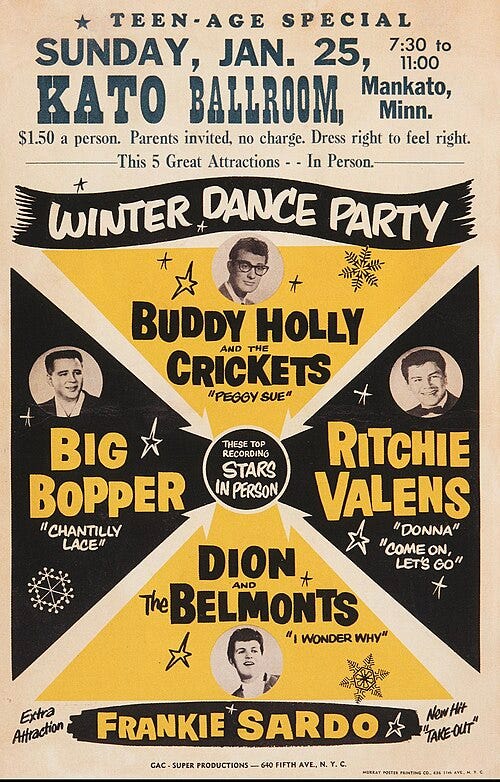
There’s a detail from the Winter Dance Party tour that has always stayed with me. The tour was a logistical disaster from the start — unheated buses breaking down in subzero Midwestern temperatures, the performers battling flu and frostbite across one-night stands in Wisconsin, Minnesota, Iowa. When Buddy Holly’s drummer, Carl Bunch, was hospitalized with severe frostbite sustained on one of those buses, the show didn’t stop. Holly, Valens, and Carlo Mastrangelo of Dion and the Belmonts rotated behind the kit, taking turns keeping the rhythm section alive.
Ritchie Valens — seventeen years old, a kid from Pacoima who had been professionally recording music for less than a year — sat behind a drum kit and held down the beat for Buddy Holly. There is no footage of this. There is no grainy film. There is only the documented fact of it, and the image that fact produces: a round-faced Mexican-American teenager, stepping into the gap, proving he belonged.
Imagine what that room felt like. Imagine Buddy Holly looking over at this kid and thinking: this kid is going to be a star.
We never got to see that star.
The Scale of What Was Lost
People call February 3, 1959 the Day the Music Died. For Mexican-Americans, something more specific died alongside it: the first credible image of what we could look like at the front of a stage. This was 1959 — before civil rights legislation, before Chicano identity had been articulated in the mainstream, before the culture had language for what Valens was doing. He barely spoke Spanish fluently, yet he recorded “La Bamba” anyway — learning the lyrics phonetically, taking a Veracruz folk standard and turning it into an electric rock anthem without apology, without explanation. The Library of Congress would eventually designate the recording as culturally, historically, and aesthetically significant. At the time, he just made it.
He lived in the hyphen. Not fully here, not fully there — and instead of choosing, he fused. That’s not compromise. That’s invention.
To put the loss in modern terms: what if we had lost Bad Bunny after his second album? Before the stadiums, before the global cultural shift, before the image crystallized into something undeniable? That comparison might sound dramatic. But that’s the scale of it. We lost the draft of something monumental — the sketchbook of a future that never got finished. Maybe fame would have reshaped him. Maybe the 1960s would have pulled him in directions we can’t predict. But at seventeen, the music was already too good to dismiss that possibility lightly.
The Mirror
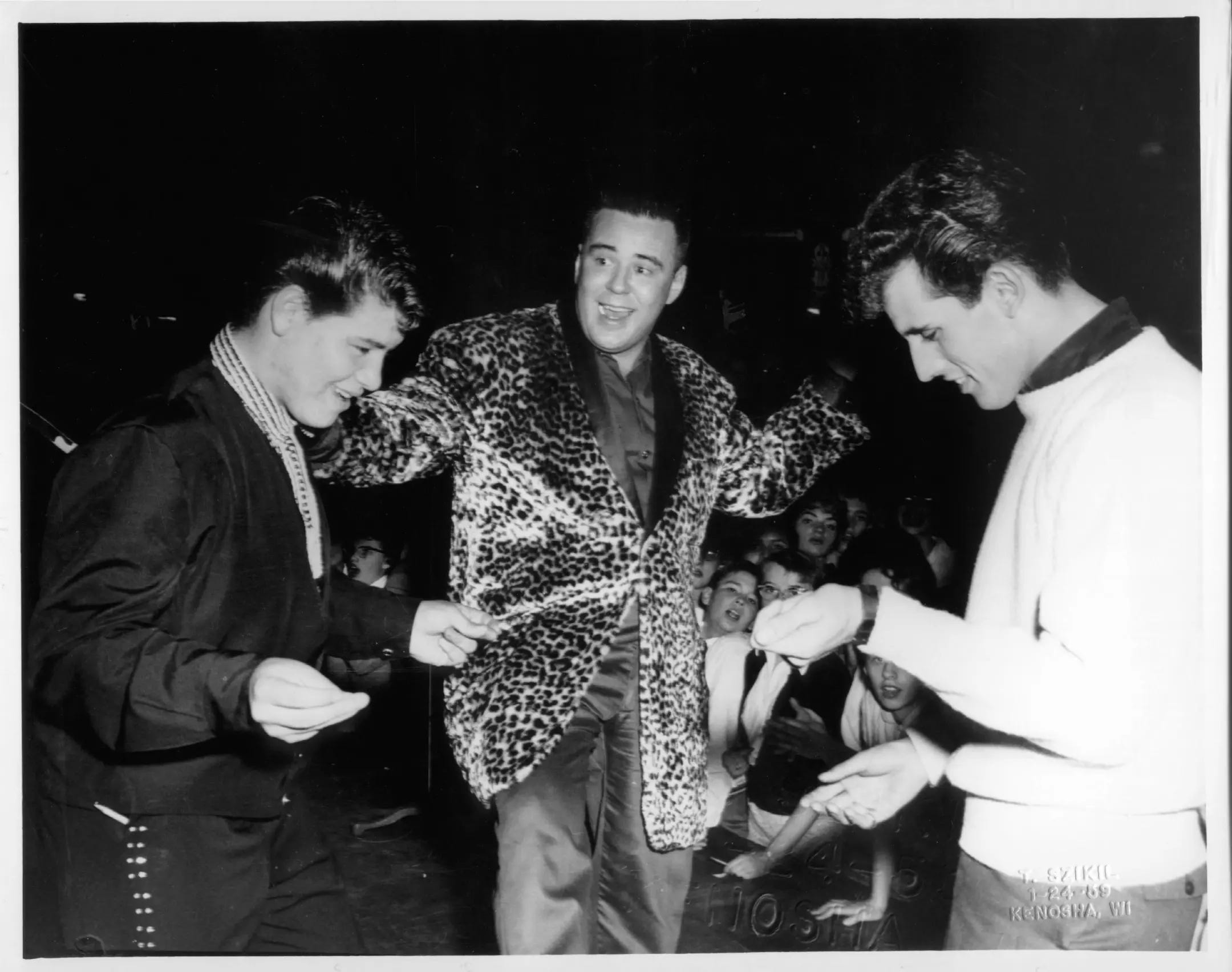
For those of us who grew up in that Mexican-American hyphen — wondering if we were Mexican enough, American enough, fluent enough, authentic enough — Ritchie Valens is not simply a pioneer. He’s a mirror. Not the polished Hollywood version. The real one: a round-faced kid from Pacoima with Indigenous Yaqui roots, absorbing mariachi and R&B and country and rock simultaneously, stepping onstage without asking anyone’s permission to exist.
We deserved to watch him grow up. We deserved to hear what a twenty-five-year-old Ritchie Valens sounded like — a thirty-five-year-old one. A Ritchie navigating the Civil Rights era, influencing bilingual rock before it had a name, bending the culture from the inside. Instead, we inherited a myth. And myths are easier to package than evolution.
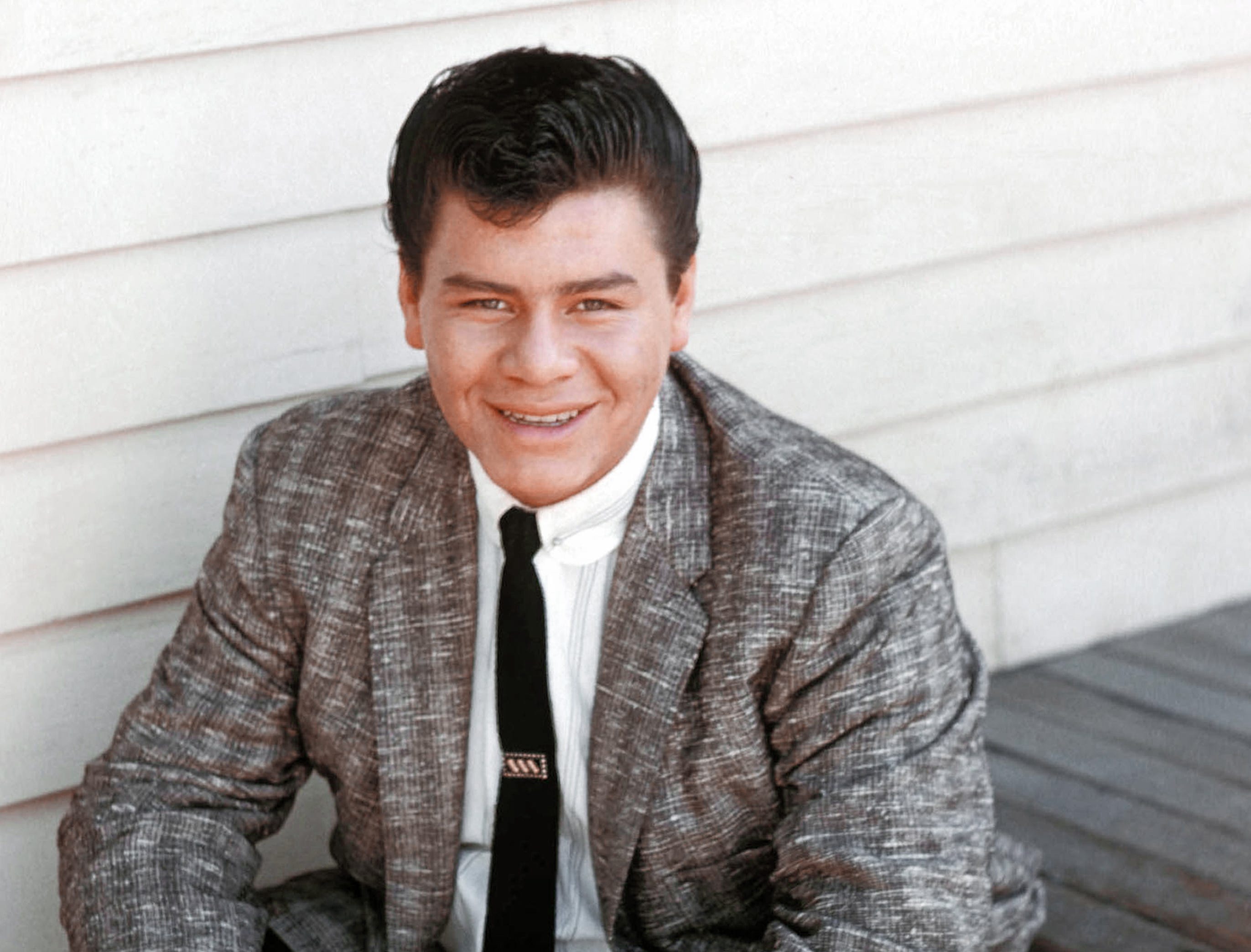
Here’s to Ritchie
Here’s to the bootlegs that might still surface. The rehearsal tapes. The alternate takes. Here’s to the possibility that somewhere, there’s documentation of him sitting behind a drum kit on a frozen Midwestern night, keeping the beat for a man who was about to become a legend — not knowing he was already becoming one himself.
One day, I’ll rewrite his story properly. Not as tragedy. Not as cautionary tale. Not as a three-song footnote in someone else’s history. But as the full account of a round-faced, light-skinned Mexican-American kid from Pacoima who stood at the edge of something enormous — and was, by every available measure, about to bend it.
We didn’t get enough. But what we got was already extraordinary.