

Learning How To Enter
On the Lan Su Chinese Garden, stillness, and finding seclusion in the middle of the city

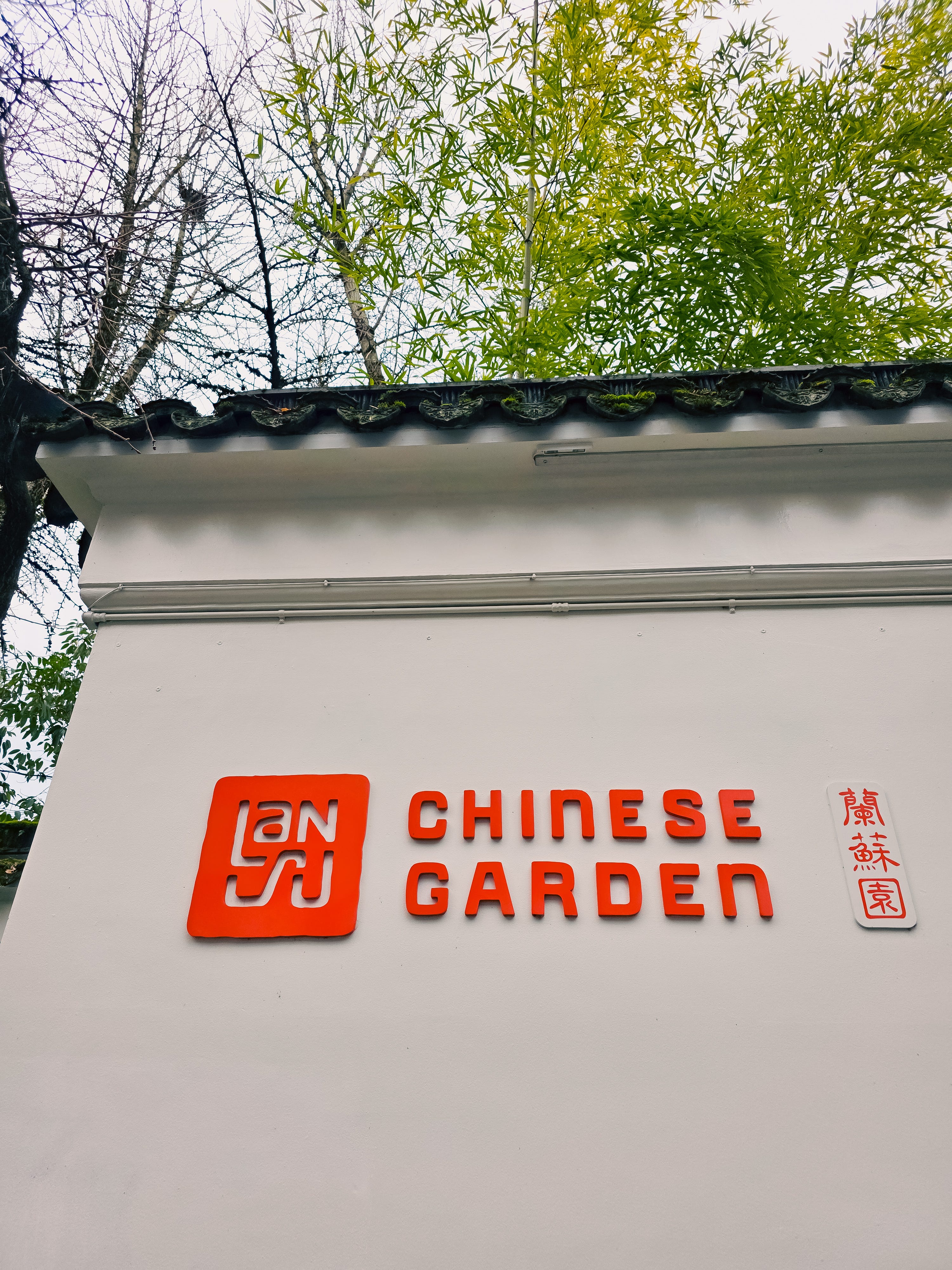
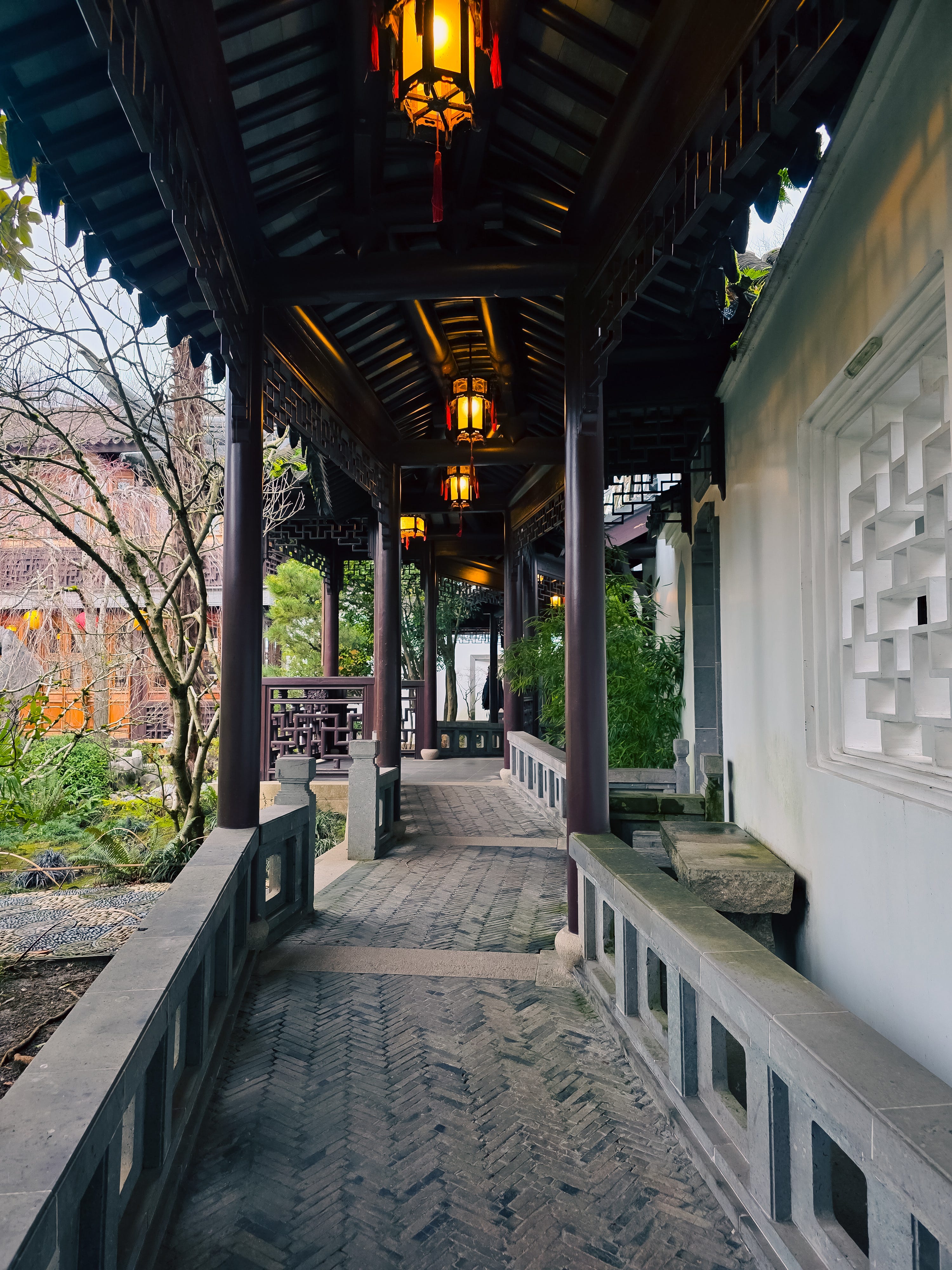
There’s a particular quality to the light in the Lan Su Chinese Garden on winter afternoons, just after the rain has stopped. The stone pathways shine, catching the red of the lanterns above them.
Beneath the eaves, where the rain still clings to stone, the garden seems to exhale. I feel it happen in my own chest as I pass through the moon gate on the northwest Everett Street side.
I came here to remember how to breathe.
When the world feels like it does right now; too sharp, too loud, too insistent—I find myself thinking, as I enter: this is a dream. Maybe not my dream, but somebody’s.
Back in the 1980s, someone looked at Portland; rain-soaked, rough-edged, still figuring itself out—and imagined that a classical Chinese scholar’s garden could exist here, in this neighborhood. Not a replica. Not a theme. But a true expression of something more than two thousand years old, planted deliberately in the soil of the Pacific Northwest.
I read that it took nearly a decade of dreaming before the ground was ever broken. Sixty-five artisans crossed an ocean to build it with their hands. They brought stones that had rested at the bottom of Lake Tai for centuries; limestone formations so prized that ancient Chinese poets wrote about them. Five hundred tons of rock. Pieces that seem to float despite their weight, holding impossible contradictions: heavy and light, ancient and new, stone and cloud.
The garden opened in September of 2000. I wasn’t here yet. And somehow, when I finally arrived in this city, it felt as though it had been waiting for me.
Many years ago, what feels like another lifetime—I had the good fortune of standing in the Astor Court at the Metropolitan Museum of Art, that jewel box on the second floor where Ming furniture rests under controlled light and constant temperature. Exquisite, yes… but also still. Too still.
A garden under glass, protected from weather, from time, from the messy unpredictability of real seasons.
I’ve walked Liu Fang Yuan in Southern California, sprawling across acres of mountain terrain, borrowing views from the peaks that surround it. Magnificent in its sweep. Ambitious in its desire to encompass everything.
Lan Su is different.


Lan Su is here. In our city. Wedged into a single block in Old Town Chinatown, surrounded by buildings and MAX tracks and traffic and all the beautiful chaos of urban life. A scholar’s garden designed not to escape the city, but in many ways negotiate with it. A Ming-era garden designer once wrote that the highest art was finding seclusion in a noisy place; not retreating to distant mountains, but discovering stillness in the middle of everything.
That’s what I need.
Or at least what I’m still learning to reach.
Stillness, carried breath by breath.
The garden sits in a neighborhood that has held Chinese communities since the 1850s, even as exclusion laws, displacement, and erasure pressed in across generations. When it was named Lan Su—Garden of Awakening Orchids—it bridged Portland and Suzhou, creating something that belongs to both and fully to neither. A threshold space. A between place.
That’s where I live, too.
It’s winter now—a season where the gray feels endless and the rain feels personal. I come here for the flowers. The Chinese paperbush. The winter camellia. And my favorite of them all, the wintersweet.
There’s something almost unbelievable about those waxy yellow blooms appearing in the middle of brutal cold, releasing fragrance when nothing else will. Some mornings, that scent feels like proof that I’ll make it to spring. The Chinese prize these flowers for their timing, for their beauty in hardship, for their persistence against the odds.
I understand that metaphor.
More than that, I need it.
Rain changes everything here. It changes your mood. It changes how you move. It forces you beneath the covered corridors, paths that refuse straight lines. The walkways zigzag deliberately, unwinding you with every turn. The ancients understood this. The shortest distance is rarely the most important one.
Read that again.
The shortest distance is rarely the most important one.
Straight lines are efficient, but they’re empty. The turns ask something of you. They require patience. Perseverance. Each angle reveals a different view, the garden multiplying itself as you move through it, reminding me that perspective is everything; that where I stand determines what I’m able to see.
When anxiety grips, I go to the stones.
The banyun—half of a cloud—stands in the outer courtyard, so heavy it required machinery to place, yet suggesting nothing but lightness and air. I trace its surface, the wrinkles and hollows, the way it holds contradiction. The Chinese revered these stones as mountains where immortals lived. I’m not looking for immortality. Just perspective. Just the reminder that I am small, the world is large, and somehow both of those things are a comfort.
When sadness comes, I need the water.
Lake Zither takes up only part of the garden, but it feels vast because of reflection—because of how it multiplies everything it touches. My sorrow comes back to me there, acknowledged but softened, spread across a wider surface. Held, but not trapped. Seen, but no longer singular.
When anger burns, I walk.
The rhythm of columns. The repetition of frames. Each leak window offering what they call a cultured view—nature shaped, contained, made comprehensible. When rage makes me feel wild, even dangerous, I need that containment. I need to see the world through frames until it starts to make sense again.
When joy arrives, I watch.
Parents crouching with children to count koi. Couples discovering the moon gate, their faces shifting as understanding dawns. Wedding parties gathered in traditional dress, trying to hold this beauty in photographs, not yet realizing it’s the kind of beauty you can only keep by letting it pass through you.
And when numbness descends—those stretches of neither good nor bad, just absence—I go to smell.
Osmanthus. Gardenia. Roses that feel almost impossible. Scent bypasses thought, goes straight to something older and more animal. When I can’t feel anything else, fragrance remembers for me.
As I’ve gotten older, I’ve realized how much of my life has been lived against this garden. Breakups. New love. Professional despair. Small, quiet victories. Every version of myself since finding Portland has walked these paths, crossed this bridge, sat beside this water. All the moods. All the seasons.
What keeps me returning isn’t escape. It’s the opposite.
It’s learning that seclusion doesn’t mean isolation. That quiet doesn’t require absence. That the deepest stillness can be found in the middle of noise, if you know where to look—and how to enter.
I used to think of the moon gate as decoration. Now I think of it as something else. A threshold. A portal. An invitation. Passing through it isn’t like walking through a door. Its roundness, its sense of completion, makes you aware that you’re moving between worlds. You have to choose to enter. You have to arrive with intention.
And if you do—if you slow down, if you notice, if you bring your full attention—the garden gives something back. Not happiness. Not answers. Something older than both. A reminder that we knew how to be human before we learned how to be productive. That beauty isn’t a luxury, but a necessity. That contemplation isn’t an indulgence.
At least not for me.
For me, it’s survival.
I’ll be back tomorrow. Or the day after. Whenever I need to remember who I am beneath the noise. The wintersweet will bloom or it won’t. The stones will stand in their patient, improbable way. Lake Zither will hold whatever sky it’s given. And I’ll pass through that moon gate and feel my chest release.
One world giving way to another.
Sometimes it’s the orchids.
Sometimes it’s me.
But always, always—it’s the awakening.


