

Morel Tinga Chalupa
Forget everything you knew about a chalupa and add a prized Oregon mushroom to it.

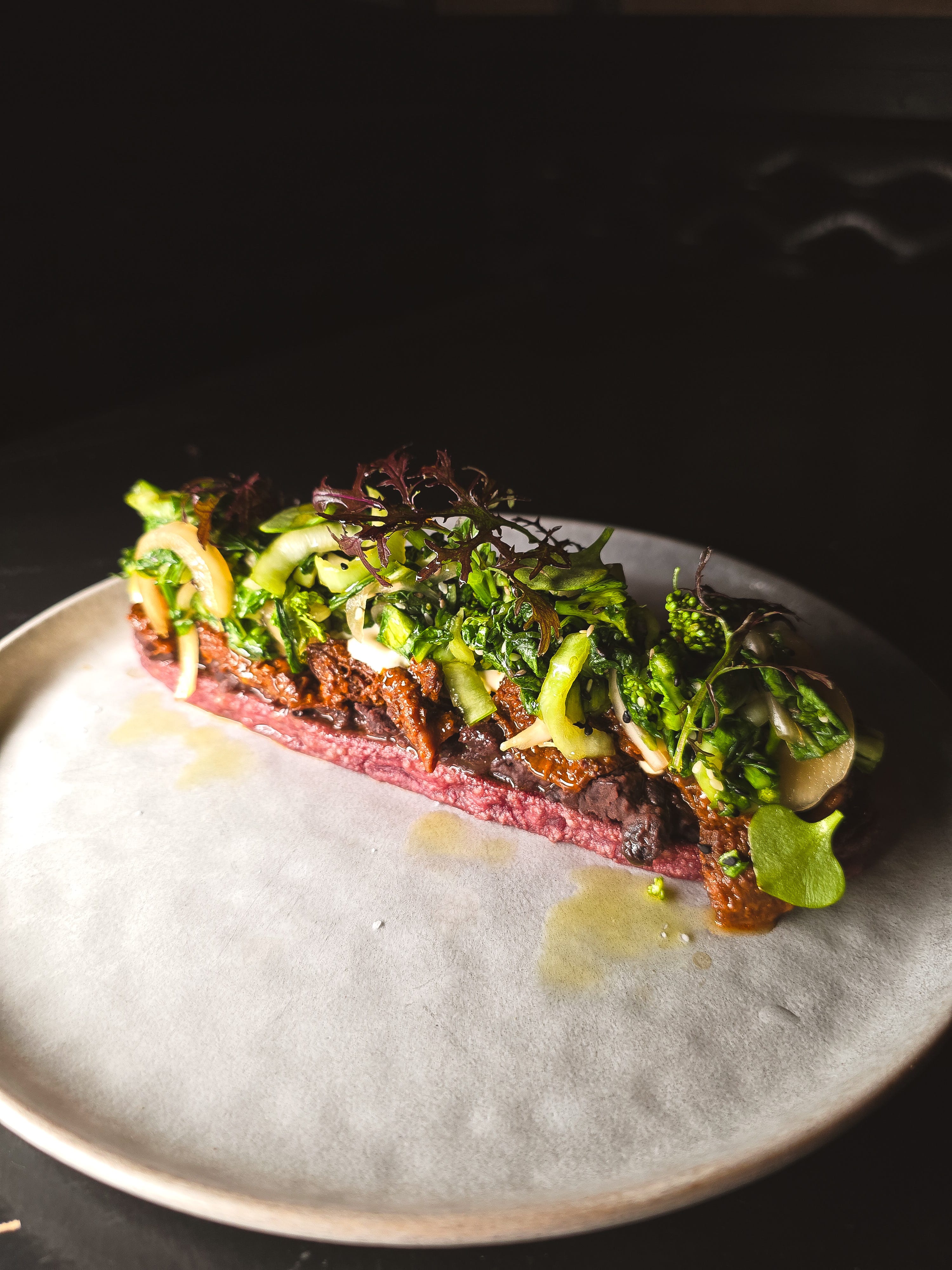
As a hyper-seasonal chef, I try to be really intentional about every ingredient I’m using for a dish. Some weeks, I just get cravings. This week, I wanted a chalupa.
Thanks to Taco Bell, just about everyone knows what a chalupa is. But what they don’t know is that a chalupa is from central Mexico, where the name refers to a canoe that you would take to get into Mexico City. This version is super different from both versions (Taco Bell and central Mexico) because it features a morel mushroom tinga instead of the chicken or beef that you may be used to seeing.
Why Not Vegetables?
I’ve done this several times with dishes that most people associate with meat. Every time, I tell myself, well, I could make something out of meat, so what’s stopping me from making them with vegetables? So the morel mushrooms in this dish are the first of this season, coming from Oregon. The morels hold their shape really nicely and a tinga is a really great way to utilize the first batch. The flavor of them, the texture of them is very distinct, and in my mind, they kind of symbolize the time and place we are right now. When I think of morels, I instantly think of somewhere in North America when it’s spring.
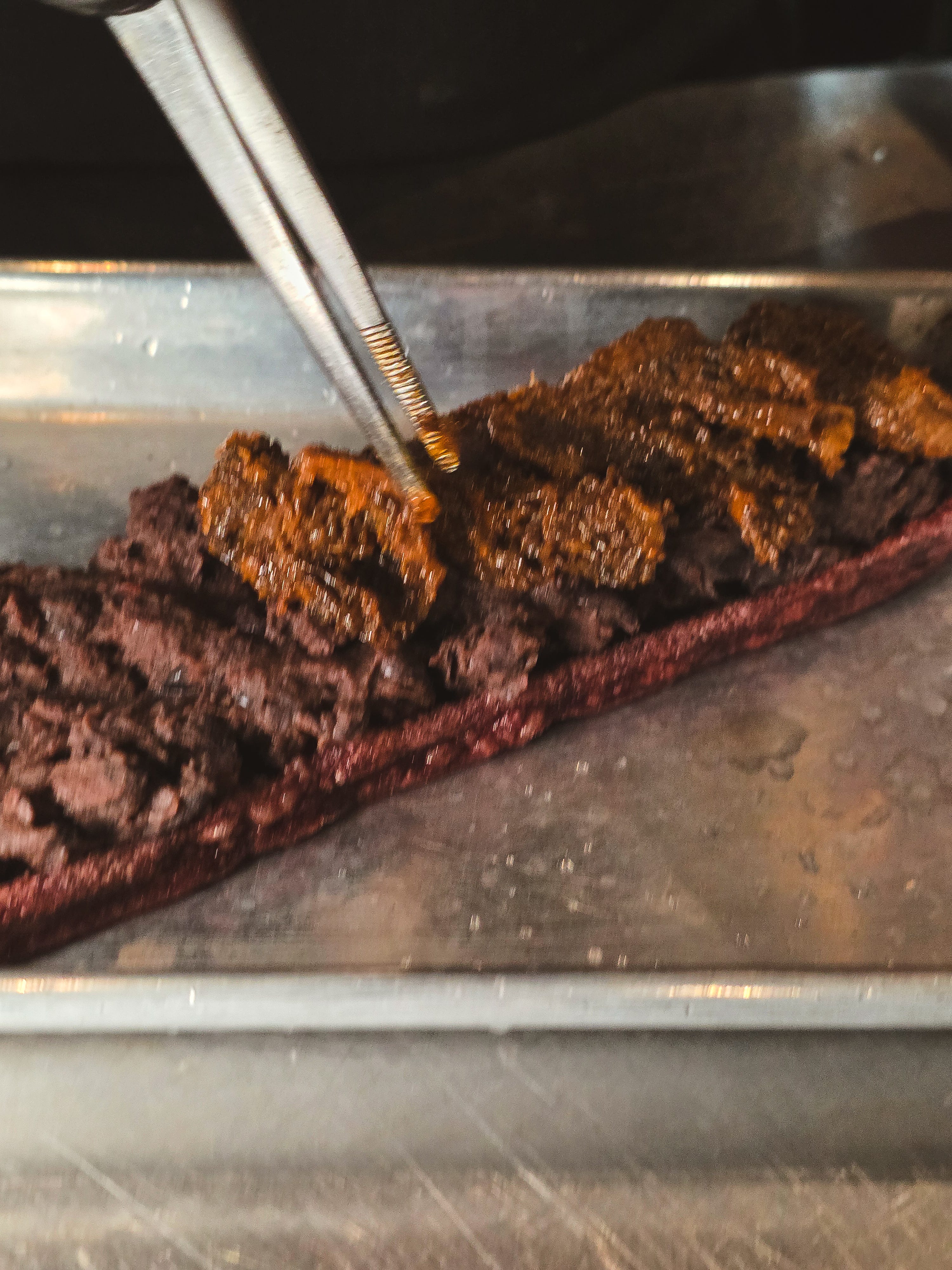
The Morel Tinga
With that, it just felt obvious to make a tinga. So we make the tinga by combining chile sandia with some caramelized onions, Mexican oregano, and Japanese ingredients like koji, vinegar, and tamari. Tomatoes are another thing that’s super crucial for tinga, but to honor its seasonality, we use sundried tomatoes in oil since the fresh ones aren’t in season. After letting that cook for a couple of hours, we emulsify it and blend it and make it into our adobo sauce. The tinga has even more caramelized onions, garlic, Mexican oregano, and finally the morels, which we have to cook for another hour to evaporate their moisture. At this point, it’s a demi-glace that really sticks to the mushrooms. You can really use all the morels on anything. You can use them on a tostada. You can use them on a huarache. That’s the beautiful thing about guisados and masa. You can use any kind of masa as a vessel, and you can use any kind of guisado for the topping.
Preserving Bok Choy Rabe as an Unfermented Kimchi
Another important feature of this chalupa is the bok choy rabe. So rabe in general is a spring ingredient, typically a brassica or a vegetable that’s starting to flower or bolt–and in that moment of flowering, the leaves and the stems are edible. Using bok choy for this dish was obvious because it’s so tender and herbaceous, and usually, baby bok choy is something I really enjoy. But bok choy rabe is even more delicate than that, so utilizing its sweetness and herbaceousness made a lot more sense than something like a kale rabe or broccoli rabe.
For our bok choy rabe, we trim the leaves, cut the stems, and then make a geotjeori out of it. A technique I learned with Peter Cho at Toki, geotjeori is like a quick version of kimchi–but mine is vegetarian because I omit the fish sauce and shrimp paste. Geotjeori helps me preserve the texture of the bok choy while adding something acidic to really brighten everything up.
For my chalupa, I’ve combined these ingredients and layered them with emulsified gigante beans (think hummus, but replace garbanzo beans with butter beans) and crema Mexicana.
Complex Layers With Simple Execution
Now, what I’ll say right away about this chalupa overall is that the morels stand out the most because they’re morels and morels are incomparable to anything. However, between layers of gigante beans, bok choy, morels, and tinga, I’m building complexity but in a way that looks very simple. The flavor of the texture of the chalupa will erase any conversation you’ve ever had about chalupas in general and what they’re supposed to be like.


 | A guest post by
|