

Purple Sprouting Broccoli With Mole de Novia
Highlighting my favorite spring produce with a lesser known white mole from Oaxaca.

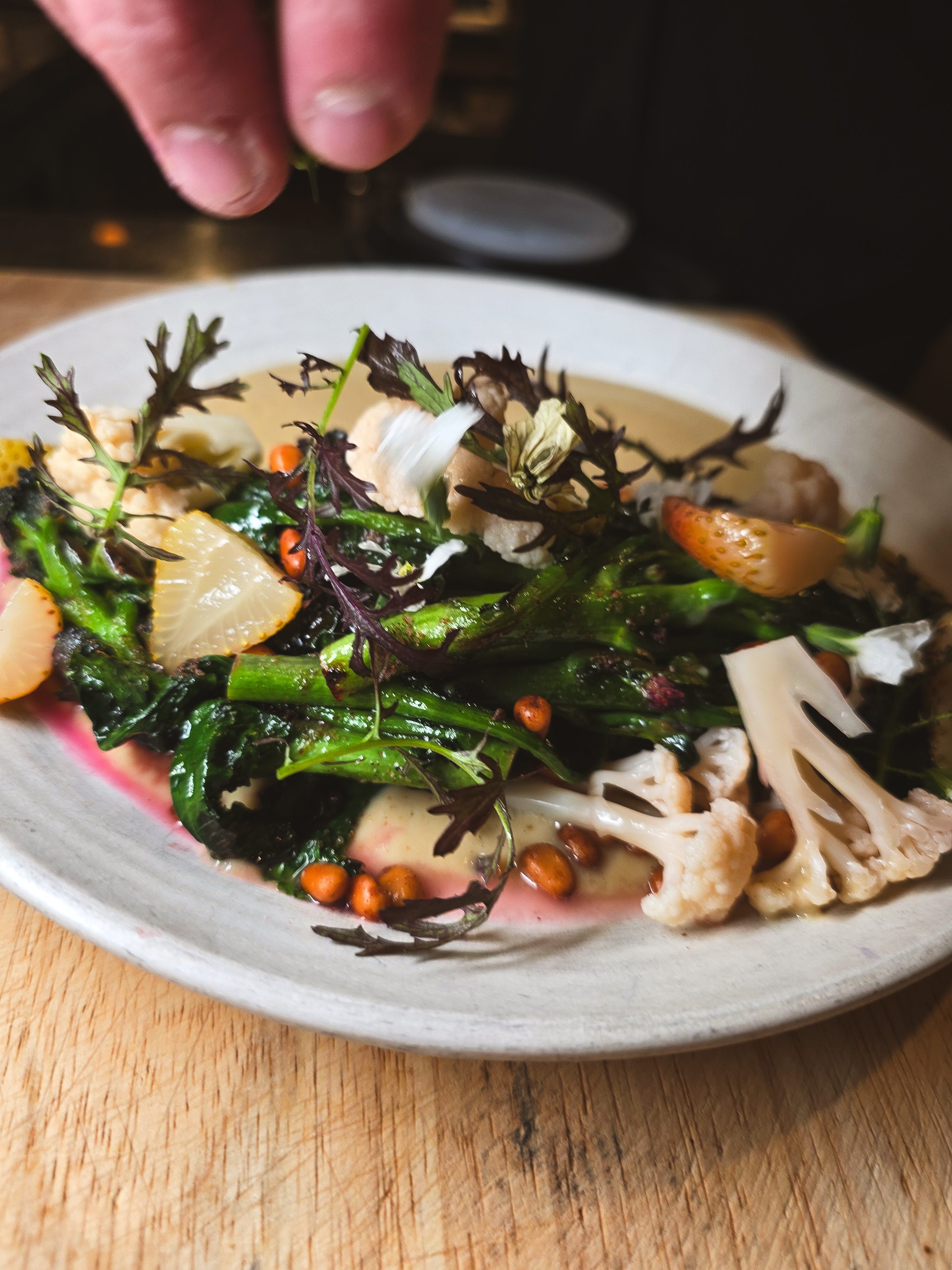
Purple sprouting broccoli is probably one of my top three favorite ingredients of the entire year. Compared to broccoli raab or rapini, it’s sweeter. It has a lot better texture. It roasts really well, it grows really well. It fries really well, and its florets are really distinctive.
For this week’s dish, we’re using those florets from Bethel Farms, poaching it, and then searing it, which makes it tender with some really nice sear marks.
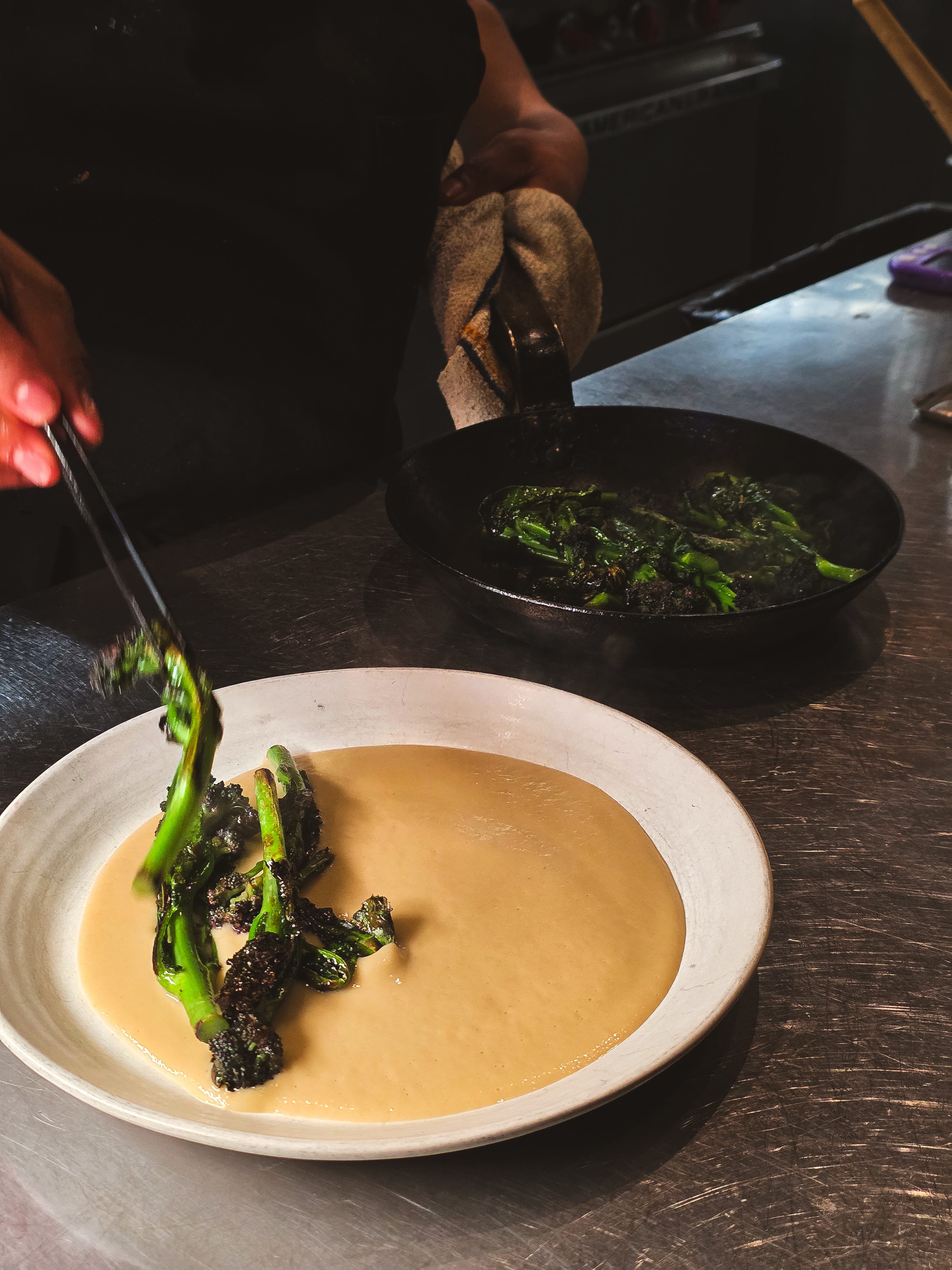
Pine Nut Mole de Novia
Because purple sprouting broccoli is a brassica, we felt that utilizing cauliflower in the mole really represented the beginning of spring.
When you talk about mole, there’s a few states that come to mind, Oaxaca of course. Oaxaca has several famous moles that are considered the foundation of mole, but there’s also lesser known ones. Mole de Novia is from the Mixtec that’s meant for weddings, and utilizes lighter ingredients so the bride doesn’t stain her dress. Ours this week is going to be made of cauliflower, along with leeks and golden raisins. It’s one of the first that I first learned to make with Lauro Romero, who used to be our executive chef, and when I took a bite, I was just like, this is not what I thought mole was supposed to be. Growing up, I thought mole was just a one-box sauce that had chocolate, darkness, spice, and fruit flavors, but when I started developing moles at Republica, I realized that there’s just so many variations. So whenever those key ingredients are in season is when we make mole de novia.
And because purple sprouting broccoli is a brassica, we felt that utilizing cauliflower in the mole really represented the beginning of spring. We’re doing a little bit of brown butter pine nuts over the top as well to amplify the flavor of the mole.
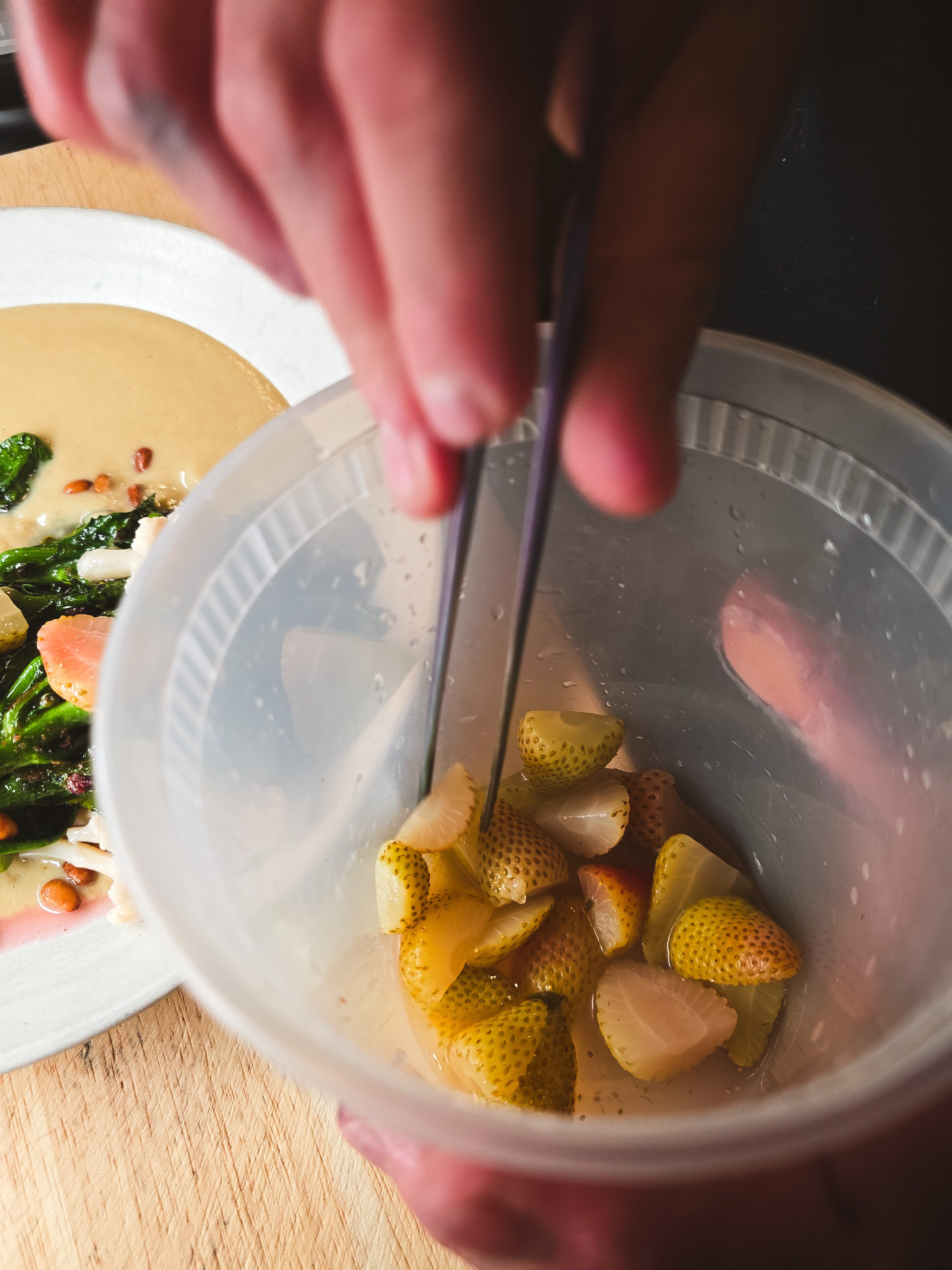
Cured Green Strawberries: A Chef’s Secret Weapon
We have beautiful green strawberries, which not only add a floral note, but there’s also a lot of texture and herbaceousness that brings everything together.
So green strawberries are an unripe strawberry that very recently have gotten a lot of attention. Most of the time they get pickled, but for ours, we compress them in verjus, lemon, and a little bit of ice wine vinegar. Pickling strawberryberries has always been kind of redundant because of the texture—they get really soft and dissipate. But green strawberries don’t do that. They hold up really well. To take something that’s an unripe strawberry that typically doesn’t often get used and amplify it as a spring ingredient…that takes some time and some attention. We’re getting ours from Northern California, still part of the Cascadia region. But a little later into spring, Groundwork Organics will have them, along with a few farmers because they know chefs enjoy them. But they won’t sell them to the general public. It’s like a special chef request to be able to get them.
Cauliflower Curtido to Add Texture And Florality
Finally, to tie it all together, we add a cauliflower curtido to the top. The texture is really different. There’s a lot more texture, with more vegetal notes, so it’s a lot more floral and allows the vegetable to sing. It’s a curtido that’s based off the Six seasons of Cooking cookbook, but we clash it with a Mexican curtido, which is traditionally a lightly fermented Mexican cabbage. So we take the fundamentals of utilizing the cookbook’s cold brine technique on the cauliflower with the flavors of the Mexican fermented cabbage, so it’s a clash of both.


 | A guest post by
|