

Strawberry Cucumber Aguachile
Amplifying a uniquely Mexican dish through “first-glimpse” summer flavors.


Before I started developing aguachiles during my time at Républica, I thought aguachile was simply a salsa with many variations. As I learned, there’s actually a distinction in the concept and execution of aguachile that differentiates it from ceviche, which is what many people may be more familiar with in the United States.
The History of Aguachile
Aguachile is from Sinaloa and translates to “chile water.” It usually features some kind of seafood that gets tossed with the aguachile, which cooks it as you’re eating it because the chile water has an acidic component. It’s important to differentiate it from ceviche in this way, where the curing actually happens hours beforehand, making the seafood more firm. Historically, aguachile was made with smoked meats to re-tenderize it after preservation. However, when Japanese migrants came to Mexico, they influenced the dish by altering the smoked meat with seafood instead, thanks to the boom of the fishing industry at the time.
My time at República was when I really honed in on my love for seasonality and incorporated that into the philosophy of the restaurant, so that’s also when we first developed the concept of a strawberry aguachile. Now, I don’t want to say that we invented it ourselves, but it’s the first time that I personally ever saw one on a menu.
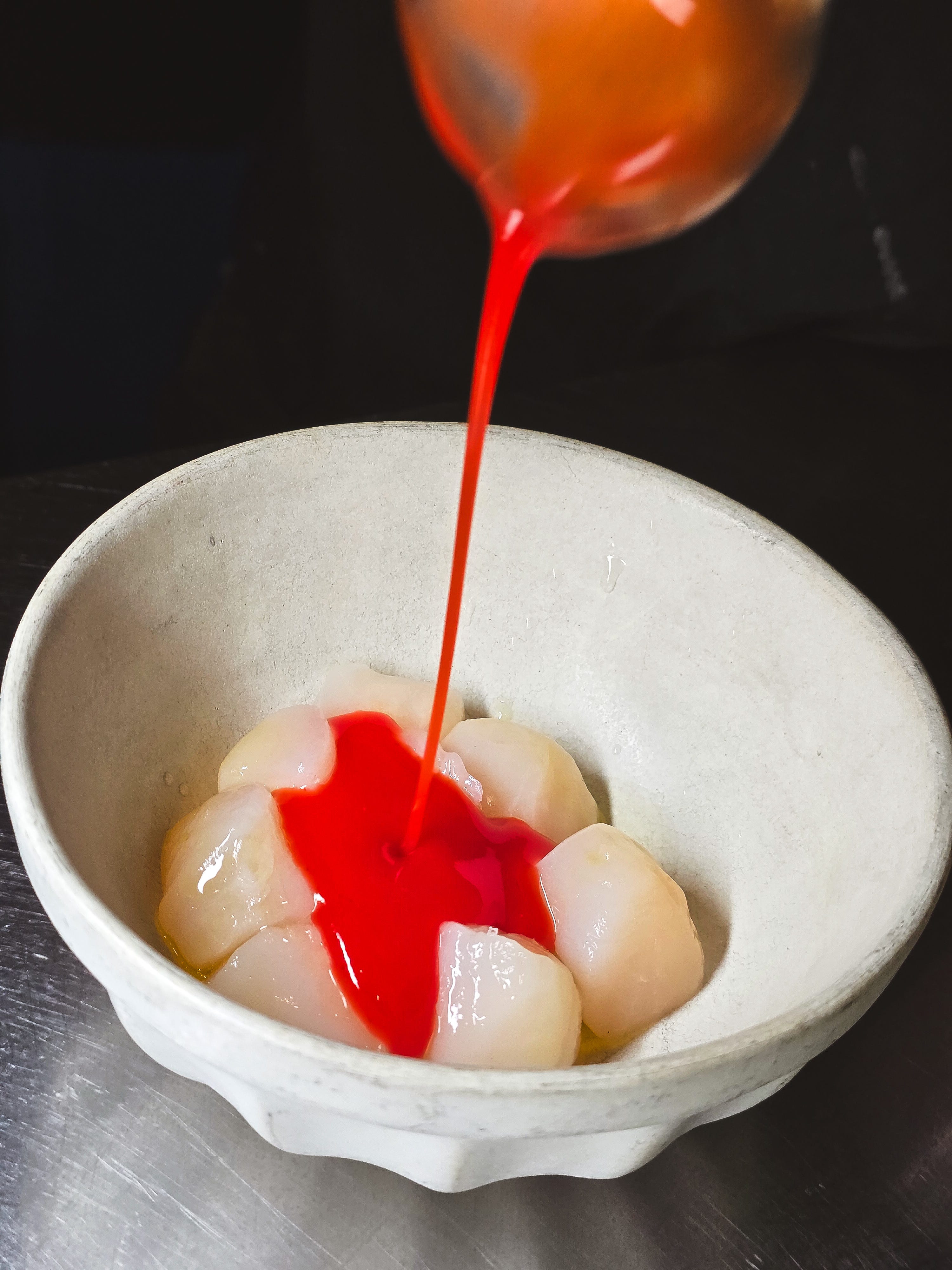
Honoring Japanese flavors in an aguachile
So now, whenever strawberries and cucumbers first come into season, we try to make an aguachile with it. The aguachile is not your traditional aguachile, which is usually made with garlic, cucumber, aromatics, and lime. Instead, we really wanted to highlight the flavor of the strawberries while paying homage to the Japanese migrants who helped define this dish. So for that reason, our aguachile has koji and mirin, along with agave and albion strawberries.
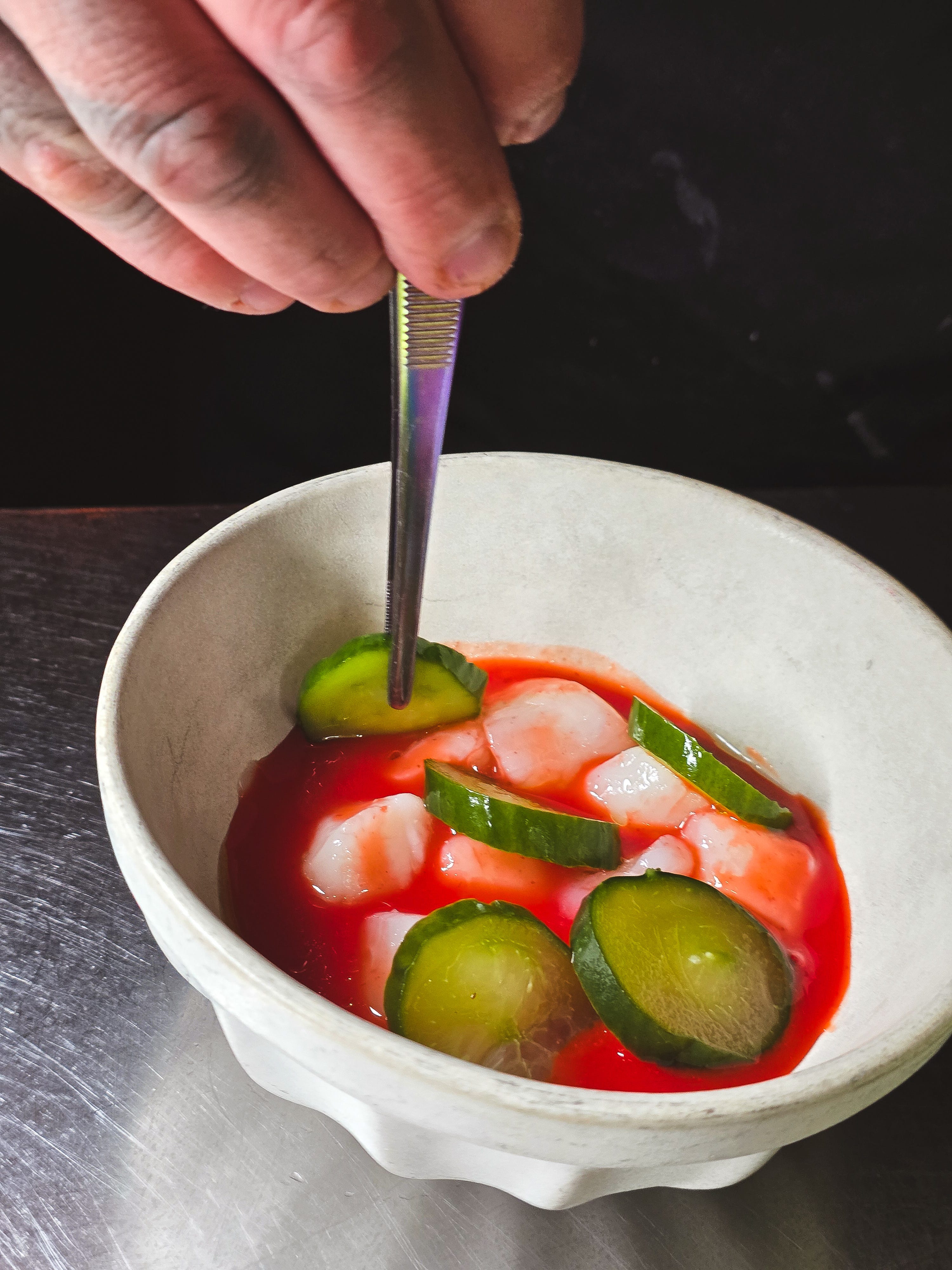
First-summer glimpses featuring strawberries and cucumbers
If last week was considered a winter-to-spring transitional time, this week is definitely starting to give you those first glimpses of summer flavors in the spring, starting with those albion strawberries. We wanted to preserve the firmer textures that early-season items hold while still giving them our own special versions of an “extra push” for maximum flavor.
Albion strawberries aren’t nearly as soft as other varieties that people in the Pacific Northwest know really well, like Hoods and Sweet Charlies. But they’re still just as red and full. So to amplify their flavor, we’re doing a pickle…I hesitate to say pickle since we don’t add the same aromatics as a traditional pickle gets…All this is is sugar, strawberry vinegar, ice wine vinegar, and salt. So it definitely has the flavors of a pickle, minus the heat.
A lot of people might think of cucumbers as a summer produce, but they actually start arriving in the late spring time as well. For our Persian cucumbers, we’re preserving the texture by compressing them in a vacuum-sealed bag. All it takes is about 40 seconds at a low pressure, otherwise you risk breaking them down much faster than intended. With just a little dressing of lemon and salt, it heavily amplifies their flavor while giving them a translucent color.
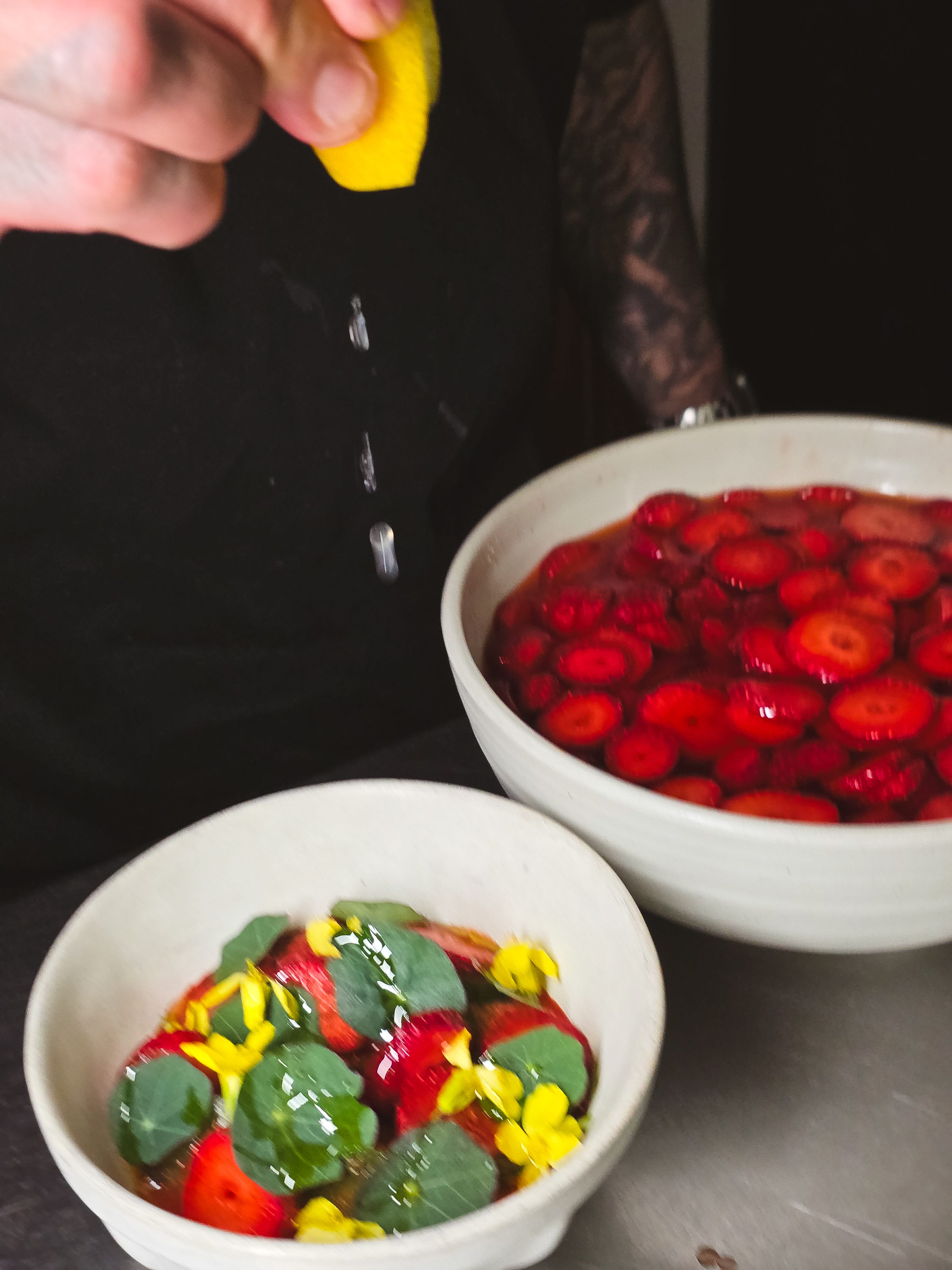
Bay Scallops that sing with freshness
I thought that the sweetness of a scallop would do really well with the flavors of the strawberries and cucumber, but also because they tend to cook a little faster with the aguachile before they go out. And honestly, it’s simply an opportunity to enjoy a scallop on its own. It really keeps the integrity and freshness of the scallop. It’s super fresh, they’re beautiful. We don’t cure them or anything. We just dress them with a little lime and salt and add the aguachile right before they go out.
One of the most defining features that people will notice for the aguachile this week is the heat, which is another component that truly differentiates it from ceviche, which isn’t always spicy. Today we’re using chile de arbol from Westwind Gardens, which is a very spicy chile that has a tropical sensation to it.
So for that, you’ll definitely know it’s an aguachile. But it’s also more than that.


 | A guest post by
|