


In 2010, when Hercules Gomez and Francisco Torres earned their call-ups to the U.S. Men’s National Team, it felt like a turning point. These weren’t marketing projects. Gomez had built a genuine career in Mexico. Torres had proven himself in competitive environments. They weren’t famous. They didn’t have Nike campaigns. They just played. And when they got their chance with the national team, people paid attention because the on-pitch performance justified the selection.
For those of us who have been watching this team since Paul Caligiuri’s goal against Trinidad and Tobago got us to Italy in 1990, the Gomez and Torres call-ups felt like the moment when something was finally shifting. The team was going to look more like America actually looks. More Black players. More Latinos. More diversity. More authenticity.
Fast forward to 2026. The USMNT roster that just got announced is, by any honest measure, the most talented and most professionally accomplished group ever assembled to represent this country. We’ve got players at top-five European clubs. We’ve got MLS stars proven at the highest level. Weston McKennie in Serie A. Christian Pulisic at AC Milan. Folarin Balogun at Monaco. This should be the moment where all that investment; the infrastructure, the youth development, the overseas experience — actually pays off.
And then Diego Luna didn’t make it.
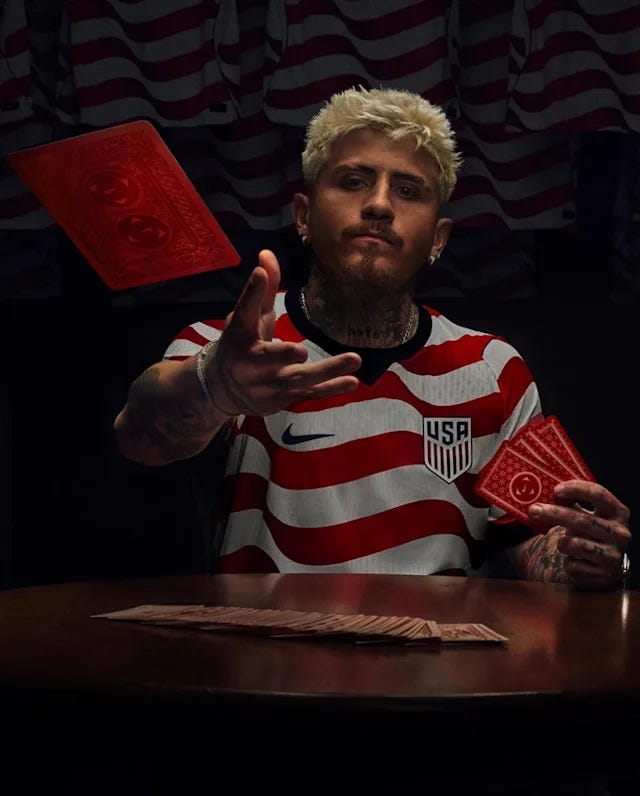
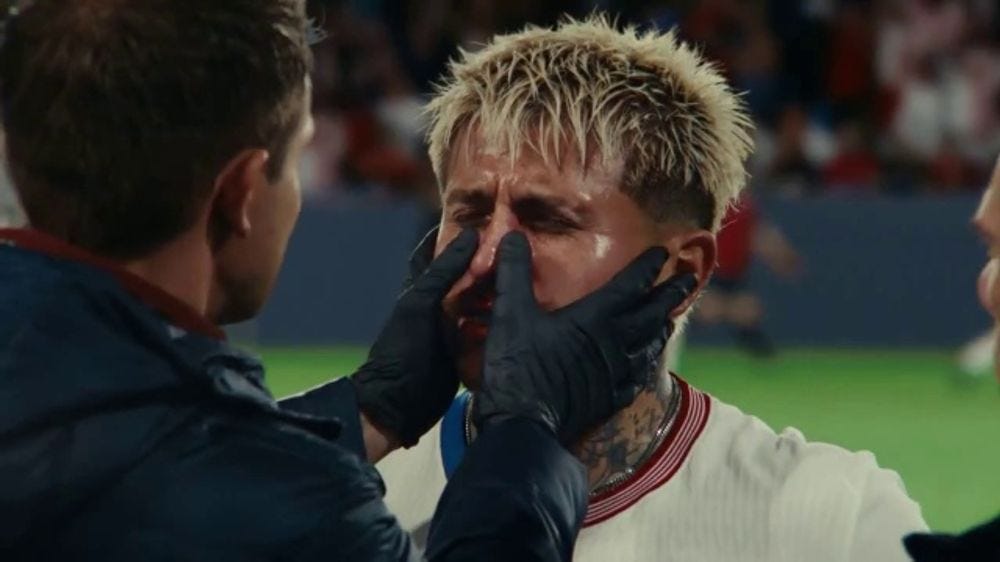
For five days before the official announcement, the internet lost its mind. Luna was the story. The kid with the broken nose. The working-class hero. The face of a new generation of American soccer. Marketing had done its job so well that when Mauricio Pochettino’s final roster dropped, people felt betrayed on Luna’s behalf. How could you cut the guy you’ve been selling to us all year?
The Leak That Wasn’t Quite An Accident
Here’s something worth sitting with: Was that leak intentional?
Did U.S. Soccer know exactly what they were doing by letting the roster slip to trusted media outlets four days early? Think about it. If this announcement happens for the first time on Tuesday in New York, if Luna’s exclusion lands fresh and hot in a controlled environment, that becomes the dominant story for weeks. The focus shifts entirely from celebrating who made the team to litigating who didn’t. The players who actually earned their spots get buried under questions about marketing decisions and roster construction.
By leaking it early, U.S. Soccer ran the Luna story through its full cycle before the official moment arrived. By Tuesday, people had already vented, already processed, already moved on. The official announcement landed in a calmer environment, with the focus where it belonged — on the 26 players who’d actually made the team.
Brilliant communications strategy, whether intentional or not. The only real misstep was Pochettino not personally calling the players who got cut. That’s the one part of this rollout that has no defense.
The Hype Machine Got Ahead of the Player
The real story isn’t the leak. The real story is simpler and more uncomfortable: we built a narrative around a player before he was ready for it.
This isn’t Luna’s fault. It’s the hype machine’s fault. It’s all of us who got caught up in the moment. Luna had a good year in MLS. He showed fight. He showed character. The broken nose against Costa Rica wasn’t manufactured — it was real, and the kid played through it, and that mattered.
But here’s what nobody wants to say out loud: he was getting national team minutes last year because there weren’t enough healthy bodies to fill the midfield. He wasn’t getting called up because he’d outcompeted everyone. He was getting called up because the cupboard was bare. Weston McKennie was hurt. Johnny Cardoso was unavailable. Yunus Musah had fallen out of favor. Tanner Tessmann was working his way in. So Luna stepped in and performed well. That’s real. That matters.
But it doesn’t automatically mean he was ready for a World Cup against Paraguay, Australia, and Turkey.
We’ve Done This Before. His Name Was Freddy Adu.
We’ve built hype machines around young American players and watched them collapse under the weight of expectations before. Freddy Adu comes to mind immediately. But here’s what people miss when they invoke Adu’s name casually as a cautionary tale: Adu, at 13 years old, was already proving himself against under-17 competition. At 15, he was winning at the under-20 level. He was playing meaningful MLS minutes before he turned 16. He had actual credentials stacked before the machine took over. The Adu story was tragic precisely because the talent was real and the early evidence was real.
Luna? He’s 22. He had a strong 2025 in MLS. That’s his resume. That’s it.
The gap between Adu’s trajectory at a comparable age and Luna’s is enormous. Adu had already accomplished things at the international youth level that suggested genuine, elite-level potential. Luna’s accomplishment is being the best available option when everyone else was hurt.
That’s not a slight on Luna. That’s honesty.
The Physical Reality
There’s also a tactical truth nobody wants to talk about because it sounds reductive. Luna is 5’7 - 5’8. By itself, that’s fine. Miguel Almirón is roughly the same height. But Luna doesn’t play at the size he is. He doesn’t have the strength or the physical density to compensate. He’s not the kind of small player who wins second balls or holds his ground in midfield against bigger, more physical opposition.
Hakan Çalhanoğlu (5’10”), Atakan Karazor at Stuttgart, the Paraguayan midfield built around Villasanti and Diego Gómez — these aren’t matchups Luna is equipped to handle right now. Pochettino looked at the World Cup he’s actually walking into and made a call based on what the games will demand, not what the marketing department wishes.
Where the Mexican-American Story Actually Lives
And here’s where we need to be careful not to let this become a story it isn’t. This isn’t about race. This isn’t about U.S. Soccer turning away from Latino players. The Mexican-American pipeline that started gaining real traction with Gomez and Torres in 2010 is alive and well on this 2026 roster.
Alejandro Zendejas is on the team. He’s playing at Club América — one of the biggest clubs in CONCACAF, playing meaningful Liga MX football week in and week out. Ricardo Pepi is on the team. He’s playing in the Eredivisie at PSV, scoring goals in the Champions League. Both of these guys represent the same community Luna comes from, and both of them earned their spots through sustained performance at a high level.
That’s the win. That’s the proof that the door is open. Latino representation on the USMNT isn’t suffering — it’s thriving on merit.
The Luna omission isn’t a step backward for that community. If anything, it’s a reminder that the standard has gotten higher because the team has gotten better. You don’t just get on the World Cup roster anymore because you had a good MLS season and a compelling story. You earn it by competing with players who are doing it at the level the modern game demands.
What This Actually Means
Look, I love what Luna brings. I love the fight. I love that he wears his heart on his sleeve. I love that he plays through broken bones and gives the kind of effort fans connect with. I feel terrible that a kid who was packaged as the face of this team’s future is sitting at home this summer while his teammates play in a home World Cup.
But the harder truth is this: he isn’t talented enough for this moment. Not talented in the abstract — he’s very talented. Just not the right talent for what this specific tournament requires from this specific roster.
Pochettino, to his credit, separated the narrative from the reality. He looked at what he actually needed — defensive solidity, physical presence, players who’d proven themselves at a higher level — and he made a decision. It might prove to be the wrong call if injuries hit. But it wasn’t made in a vacuum of bias or marketing pressure. It was made on the merits of what this World Cup actually demands.
The real lesson isn’t about Luna. It’s about the gap between the story we tell ourselves and the reality of professional football. We want our national team to have relatable stars. We want narratives that feel authentic. We want to believe in the underdog. And there’s nothing wrong with that. But when marketing gets ahead of actual player development, when hype outpaces performance, when we start selling players before they’re ready — that’s when these messy reckonings happen.
Luna will get another chance. If he develops the physical tools, if he plays at a higher level, if he sustains performance over multiple seasons against real competition, there’s a path forward. But that path doesn’t start with a World Cup roster in a home tournament. It starts with proving himself at the level the USMNT actually needs.
That’s a harder story to sell. So we probably won’t tell it.
But it’s the true one.