

The Key To The Refrigerator
On hunger, lying, and the dessert that followed me out of that kitchen.

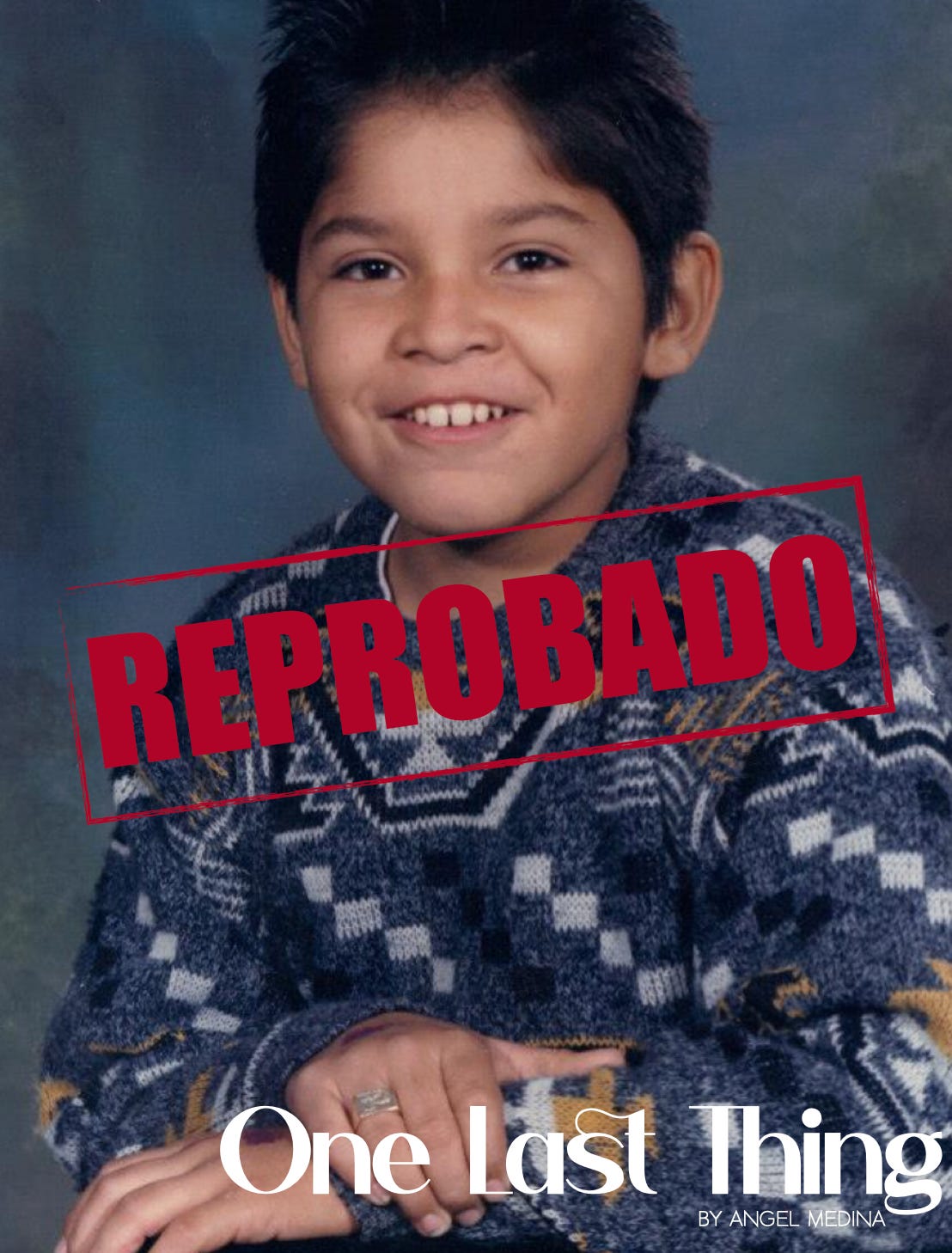
I’ve always been obsessed with food.
Not the way people say it now. Not the way it sounds in interviews, the way it makes for a clean origin story. I mean the kind that gets you in trouble.
Let me take you back. ‘85, ‘86. I don’t remember exactly. What I remember is that my brother and sister still lived with us. Half-brother, half-sister, technically. They were in fifth and sixth grade. I was supposed to be in kindergarten but my parents did the math wrong, or maybe they didn’t, and I started early. I talked a lot. I read fast. I loved being around them. They watched over me. They taught me everything I knew at that point.
And then one day, they left.
There are reasons. There always are. They weren’t my father’s kids and I don’t have enough mezcal in me right now to get into that. They moved north to Tijuana, near the border. We stayed back in Guadalajara. Me, my parents, my two younger brothers. It felt like another life.
Something in my brain shifted that year. I think it was the first time I felt it. Depression. Not the word. Not the diagnosis. Just the weight of something being gone and not knowing what to do with the space it left.
Second grade was a sad time. I hated all of it. I stopped paying attention. I had no interest. The kids in our new neighborhood weren’t my age, my mom was home all day, sad, from what I recall. My father was mostly somewhere else. So I did what kids that age do. Thundercats. Voltron. Mazinger Z, that Japanese anime robot that was way too graphic for a seven-year-old. And when I wasn’t doing that, I was eating.
A lot.
By the time I was halfway through second grade, the teachers had given up. I’d come in, get dropped off, walk straight to the back of the room, fall asleep. They’d wake me up, I’d go right back to it. We moved before they could kick me out. New school. Less forgiving. One day they told me, uh-uh. You’re not ready for this grade. Bring your parents or don’t come back.
Here’s the thing about Mexico. Elementary school runs on two shifts. Mornings for the kids whose families can afford it. Afternoons for everyone else. The ones watching siblings. The ones filling in the gaps. The ones who, for whatever reason, just have to be home in the morning.
I didn’t need to be there. I used it anyway.
This is where it gets interesting.
I started going to the Mercado San Juan Bosco. First thing I tried was bagging groceries, like the bigger kids did. I was too small. Too slow. The bags would slide off the counter before I could get to them. Some lady would shove me out of the way, grab the next one, and that was that.
So I sat on a milk crate and watched.
I watched for a week. I watched the bagger boys. I watched the cart kids. I watched who got tipped and who got waved off. I watched which lanes were the good ones, which ladies looked at us like we were already thieves and which ones looked tired enough to say yes to anything. I clocked the rhythm of the place. The good window was about ten thirty in the morning. The bad window was right before lunch when everyone was rushing.
Then I picked my mark.
She was an older woman. Two bags. Slow walker. I came up to her right outside the mercado and asked if I could carry her groceries home. She said sure, m’ijo, and gave me twenty pesos at the end. Twenty pesos was so much money. I went and got tacos immediately.
The next day I came back and did it again. And then again. After a few weeks I had regulars.
I got good at it. I said the right things. I asked the right questions. I told the right stories. The harder my life sounded, the better they tipped. I learned that early.
I didn’t save any of the money. I didn’t hide it either. I spent it immediately. Tacos. Hotcakes with cajeta. Pozole. Menudo. Potato chips. Whatever I could get my hands on. Once in a while I’d sneak into a movie by myself. Nobody asked questions. When I discovered french fries, it felt like I’d found something I wasn’t supposed to find. They weren’t even that good, honestly. It didn’t matter.
That was the goal. That was the system. Food.
One of the women, Paola, took a real liking to me. She was young. Trusted me. She had two kids her mother watched while she went to the market, so I’d walk the groceries home for her and she’d tip me a few extra pesos.
The more I did it, the more I pushed.
Now, you have to understand. I watched a lot of telenovelas. My mother watched a lot of telenovelas. The whole country watched a lot of telenovelas. I had source material.
So I started building it.
First it was just my dad’s not around much. True enough. Then it was my stepmother’s mean to me. I didn’t have a stepmother but my mother was distracted with the babies and that felt close enough to count. Then it was she hits us. Then it was she puts us to bed without dinner. Then it was she said if we ever told my dad, she’d make one of the babies disappear.
I’d test a new line each week. I’d watch her face. If her eyes got bigger, I knew I had something. I’d come back the next time and add another beat. The lie got better. Tighter. I was workshopping it. I was seven years old and I was workshopping it.
I’m pretty sure I lifted most of it from Cuna de Lobos. Some villainess in big shoulder pads threatening a child in a kitchen. It sounded real enough. She believed it. Of course she did. I’d built it from scenes the whole country had already cried about.
One day she said, I want to go to the authorities.
I begged her not to. They’ll take my brothers. I’ll never see them again. That line, by the way, that was all me. No novela. I was getting good.
She stopped asking.
A few days later, I was at home in the middle of the day, pretending to do homework, drawing, thinking about tacos. Specifically, I was thinking about a rumor going around that some fourth grader had eaten seventeen tacos al pastor in one sitting. Seventeen. I would lie in bed working out the math. Five tacos was already two days of carrying groceries. Seventeen tacos was a fortune. Seventeen tacos was a career. I would think about this rumor more than I thought about almost anything else.
Then I heard a knock at the door.
I heard her voice. I turned around.
Oh, fuck.
Paola was standing there with someone official. She looked at my mom and asked, are you the stepmother?
My mother laughed. Not because it was funny. Because it didn’t make any sense.
Paola pointed at me. Him.
In that brief moment, I started playing back everything I’d ever exaggerated about. The hunger. The punishments. The nights without food. My mother just stared at me as I watched my life flash before my eyes.
Come inside, she said to Paola. We have a full refrigerator. Let me show you.
Then she called me over and asked me to explain.
I stood there. Quiet. I told her I’d been working at the mercado, carrying groceries. She didn’t even react to that part. Her first question was, what are you doing with the money? Also, you’re the laziest human I know. I don’t believe any of this.
She asked how often I was there. I said once or twice.
Paola stepped in. No. I see him every day.
And that was it. Nowhere to go. My mother looked at me differently. Not angry. Worse. Trying to understand how far it had gone.
Why aren’t you in school?
I didn’t have an answer.
By the time we went back, it didn’t matter. They’d already made a decision. I wasn’t suspended. I wasn’t warned. I was just gone. No calls, no letters, no way to fix it. Like I’d never been there.
I had two weeks left in the school year. I kept thinking I just had to survive two weeks and figure out the rest. No report card, no grades, nothing to show. I’m going to fail second grade.
I did.
By third grade, only one place would take me. A Catholic school that doubled as an orphanage. A place known for feeding kids who didn’t have enough.
I hated it immediately. The uniform. The rules. The weight of it. It didn’t take long for them to figure me out. A week, maybe less. I wasn’t at third grade level. Didn’t matter how hard I tried. And the rest of it, the religion, the rituals, the performance, I just couldn’t get into it.
I thought, maybe if I become an altar boy, I get out of doing all this work.
They looked at me. Chubby kid. No real knowledge of Catholicism. Couldn’t fake it.
I didn’t make the cut.
So as a punishment, they moved me to the kitchen. Washing pots and pans.
It wasn’t the worst job. But it was the most humiliating one. That’s where they put you when they don’t know what else to do with you. That’s where they put you when you don’t fit anywhere else. That’s where they put you when you’re already starting to believe that you don’t belong.
But there was one thing.
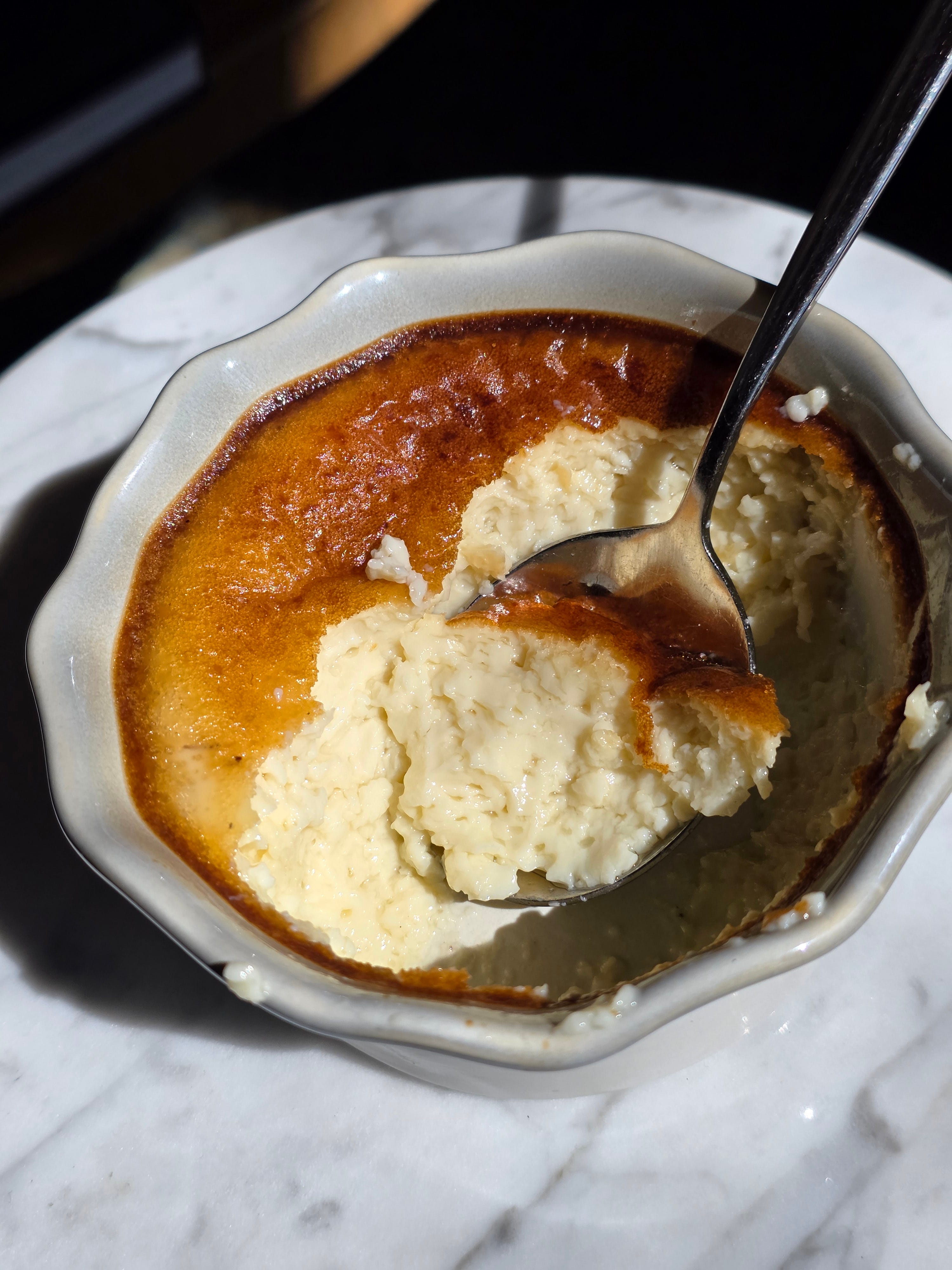
This place made the best jericalla I’d ever had in my life. Custard, kind of. Somewhere between flan and crème brûlée, but older than both. Milk and eggs and sugar and vanilla and cinnamon, baked in a water bath until it just barely sets, then run under a flame until the top blisters into a thin sheet of caramelized burnt milk. The legend was that a nun from Spain had created it as a way to feed malnourished kids. They made dozens at a time and sold them at the entrance. People walking by knew this was the place to buy them.
The first time I tried one, it broke something open in me.
By week two of scrubbing pots and pans, I’d decided I hated religion. All of it. But I loved this dessert.
By week three, I found the key.
It was sitting on top of the refrigerator. Not hidden. Just placed. The kind of placement adults use when they don’t think a kid is paying attention. I’d been paying attention for three weeks.
I waited until the nuns left the kitchen. I climbed up on a stool. I took the key. I opened the fridge.
There were so many of them. Rows of them. Little glass bowls with their burnt-milk caps gleaming under the light. I grabbed one. I snuck into the corner where the big pots dried. I devoured it like a mouse, looking at the door the whole time.
Then I put the bowl in the sink with everything else and washed it.
The next day I did it again. One bowl. I waited the right amount of time. I cleaned everything. I put the key back exactly where it was.
A few days later, two bowls. Then two more. Then I started getting brave. Three. Four. Five. I’d sit in the corner with my back against the steel of the prep counter and eat them in a row, one after the other, and the burnt-milk crust would crack the same way every time and I’d think this is the best day of my life and then I’d think it again the next day.
Then one day I ate eight of them.
Eight bowls in one sitting. No regrets. I washed everything fast, cleaned it like it never happened. I was good at it.
Not good enough, though.
They did the math. They always do. Too many missing. Too many questions. So they watched me. And there it was. The key. The fridge. The desserts. Another lie. Another system. Another place I wasn’t allowed to come back to.
They threatened to kick me out of school. It didn’t really matter. By that point, my mother had already decided the best thing for me was to go live with my grandmother in Tijuana. With my brother and sister.
That should have been the lesson.
It wasn’t.
Because by then, I’d already figured something out.
For me, food wasn’t food. It was access. It was leverage. It was something you could earn, or take, or invent a story for. And if you got good enough at it, you didn’t have to belong anywhere.
You just had to eat.
I was happy to be leaving Guadalajara. I hadn’t seen my brother and sister in over a year, maybe two. I was sad about leaving my younger brothers, sad about my mother, sad about my father in the way you can be sad about someone without quite understanding why. But I was going back to them.
Except I wasn’t.
By the time I got to Tijuana, they’d moved on. Puberty, friends, their own lives. They wanted nothing to do with me.
So I found something else.
A new obsession.
The food wasn’t the same. The people weren’t either. Nobody greeted each other the way they did in Tlaquepaque. Everything was faster and louder. More American. Basketball, rap, rock music. And food. Still food.
I made friends fast. A bunch of other kids who were also obsessed with it. We’d pool a few pesos, jump on a colectivo, head downtown, eat Chinese food. Other days, tacos al pastor. Tacos de barbacoa up the hill. Even when we played soccer, which we loved, the games were fine but it was really about what came after. Our sponsor was Nichos Pizza. They fed us after every game. That was the sponsorship.
At home, my grandmother had her own system. She’d get angry with me. Anytime I messed up, she’d tell me I was useless. Inútil. She’d say it like a fact. Like she was reading the weather. And then a few hours later, sometimes the next morning, she’d feel bad about it, and she’d ask what I wanted to eat, and she’d cook it.
That was the deal. I just didn’t know we’d made one.
Somewhere in there I started wondering. Was I messing up because I was useless? Or was I messing up because I knew what came after?
And then, later, the thing I really didn’t want to think about. Was I starting to want to be useless? Because being useless got me fed. Because being told I was nothing was the price of admission to the only kitchen that would have me.
I didn’t have language for it then. I’m not sure I have it now. But I knew the shape of it. I knew that the worse I felt about myself, the better the meal was on the other side. I knew that I was learning to translate shame into hunger and hunger into love and love into a plate of something my grandmother made me without ever saying she was sorry.
It was a cycle. Food again. Always food. Reward, punishment, apology, currency.
It fed me. It shaped me. It gave me joy.
And it gave me something else I’m still trying to understand.
Because when I look back at all of it, the lies, the stealing, the getting kicked out, the kitchens, it wasn’t random. It was all pointing to the same thing. I just didn’t know it yet.
I thought I was chasing food.
I wasn’t.
I was chasing the feeling of finally having enough of it.
Why am I telling you any of this?
Because my life, when I really think about it, is a collection of memories that show up as food. Sometimes I try to recreate them. Sometimes I can’t. Sometimes, if I’m lucky, I have people around me who help me get close enough.
There’s one in particular. That dessert. The one I kept stealing. The one that followed me out of that kitchen and never quite let go.
Jericalla.
We serve it at República. Not because it’s nostalgic. Not because it’s traditional. Because it never left me.
For some of you it’s just dessert. Rich, sweet, good.
For me, it’s everything. It’s hunger. It’s shame. It’s survival. It’s learning how to take. Learning how to earn. Learning how to lie. It’s all of it, condensed into one thing I can finally give back instead of having to steal.
I think about that kid sometimes.
The one who couldn’t fit anywhere. The one who got moved to the kitchen because they didn’t know what else to do with him. The one who had to invent a story to be fed.
Two months ago I was on my way to Florence. I was supposed to be done. Closed the doors. Booked the flight. The whole George Bailey thing, except I was leaving.
I’m still here.
Back in the kitchen. Voluntarily this time. Doing whatever is needed of me, for people who kept asking me not to go. People who didn’t need a story. They just wanted me to feed them.
That’s the part I didn’t see coming.
That kid spent so long inventing reasons to be fed that he never learned what it was like to feed someone who already loved him. To not have to earn it. To not have to take it.
To just put the plate down and walk away.
So yeah. If you come in and order the jericalla, you’ll know. Not because I’ll tell you. Not because the menu will. But because every bowl I send out is one I don’t have to steal.
That’s the whole thing.
That’s the whole story.