

The Ocean on the Wrong Side
On leaving, staying, and the food that holds it all together.

Let me take you back to mid-December, 2025.
There we were, after a run, ending up at a place called the Dockside for the largest, most American meal I could find. Pancakes — chocolate, blueberry — side of bacon, side of spinach, obviously, eggs scrambled, hash brown, every sauce they’d give me. And I kept complaining. I don’t understand. I’m doing so much. This stress is killing me. I think the idea of everything we have left to do is what kills me. We should just close already.
I looked at Olivia. She looked at me like I was crazy.
Think about it, I said. Let’s just be done with this thing. And then you and I can finally have a normal life. We could have dinner. We could have friends over. You could cook. I can cook. Or better yet — let’s go open a small bar somewhere. Greece, maybe. Somewhere near the water, where I can just watch you do what you do.
She looked at me, perplexed. Sad. Almost as if she didn’t understand why I would want that.
At least that’s how I interpreted it the first time.
What I realized later — something I’ve been struggling with for the last three months since we decided to end it — is that perhaps the thought of that, of being stuck with me more than was necessary, was crushing her. It took me a while to get there. I still go back to that moment. Maybe what I was looking for was for her to say, that sounds great, oh my god, we could sit by the water, I can cook while you write.
Looking back, it was so clear it was over.
When I was eight years old, my mother put me on a bus from Guadalajara to Tijuana. She stuck me with a woman she’d never met, said, hey, can you watch over him? And off I went. Full of wonder. Staring out the window the whole way.
When we stopped in Culiacán for an hour, I saw the hot dog vendor outside. I’d been warned those hot dogs were probably made from horse meat. It really worried me. I really wanted one. I got myself a torta de jamón instead, then got back on the bus — only this time I went straight to the back. There was nobody there. I stretched out across three seats. The bus took off.
Early in the morning, I saw the ocean.
On the wrong side.
My mother’s gonna kill me. But it didn’t matter, they were sending me off anyway. I went to the bus driver crying. He was furious. At the next stop he put me on the right bus, called my mother. And that was it. Days later, I finally made it to Tijuana. As you can imagine, everybody was pretty annoyed that I’d made things complicated.
I share that because by the time I was fifteen, I already knew I didn’t want to be where I was — Ontario, California, that town. I saw the quickest path out: the Marines. Maybe the Army. Didn’t matter. I wanted Germany, Korea — the bases where I could be stationed and then leave on weekends and see the countries I’d only ever dreamed about.
Instead I failed my medical exam, and watched my closest friends live the life I always wanted. I stayed. By seventeen I was working graveyard shifts in a warehouse, underage, while my friends were graduating. Kept it a secret because it embarrassed me. I went to continuation school to finish my credits but I refused to actually graduate from that place. And the second I had the opportunity to leave, I left. San Francisco. Haven’t looked back since. Which is how I’ve ended up in Portland, going on sixteen years now.
Florence was supposed to be my next bus out of town.
In my head, I was already gone. Cobblestone streets, old friends, new friends. I’ll never tell you all of it. The plan was: close República on Sunday, on Tuesday I’d be on a plane, no longer in a relationship, no longer somebody’s burden. Finally gone.
Did that happen? Absolutely not.
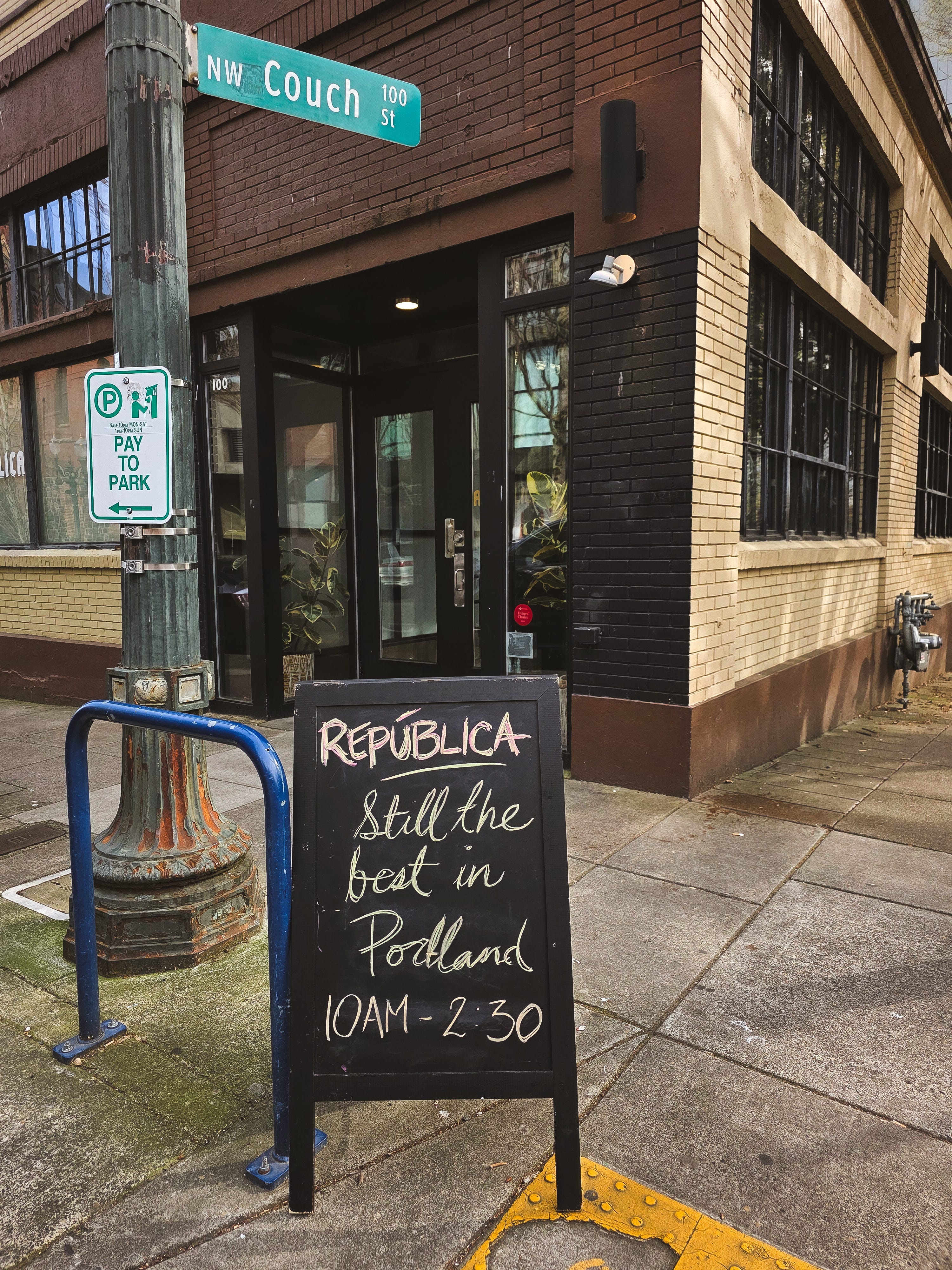
Instead, two days after the last service at República, I decided to reopen for daytime. My team asked. It didn’t take long to convince me. And somehow I’m still here, feeling like I should be in Florence, George Bailey-ing this whole thing in Portland — and a lot of it feels a lot like Bedford Falls.
As George Bailey once said: “I’m shakin’ the dust of this crummy little town off my feet and I’m gonna see the world. Italy, Greece, the Parthenon, the Colosseum…”
Happy Sunday.
Four days into this experiment — Republica 4.0, 5.0, I don’t even know what version anymore. Here’s what you need to understand before we go further: there was no plan for this. The plan was never to come back and do anything that looked like daytime. If it had been planned, it would have been too thought out. What came out instead was natural progression. A few employees pitched the idea weeks before closing and I shut it down immediately. Then it became interesting. I said, okay, maybe I’ll give it to them. Let them hold the space for a month. Play it by ear.
Then the doors closed and I had a lot of feelings. A lot of things to process. Bigger plans I’m not ready to share yet. But I didn’t know what else to do, and my team was excited, so we went back to the fundamentals.
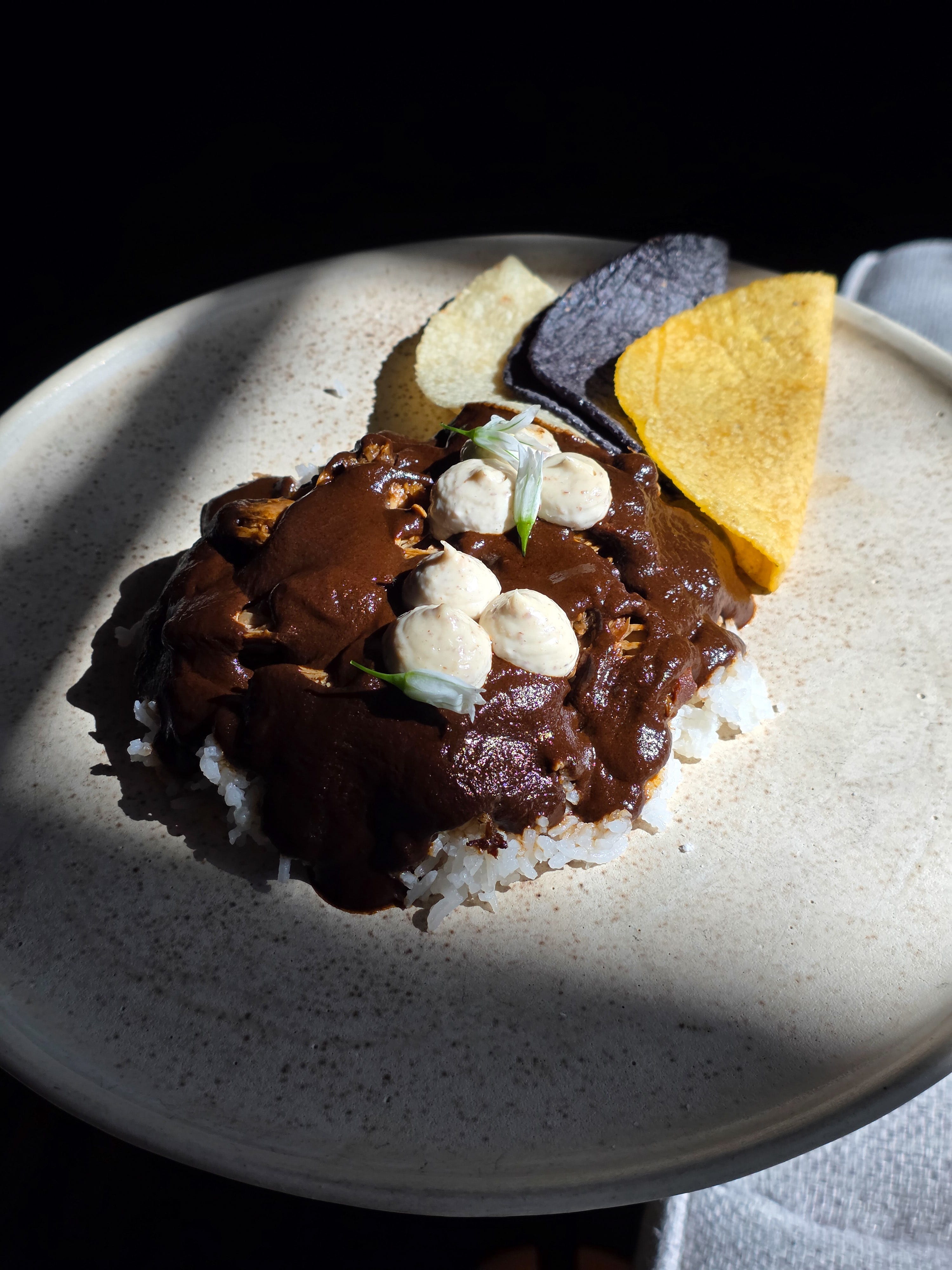
Quesadillas. Pozole. Tacotes — large tacos. Maybe a guisado. A concha, a champurrado, some agua fresca. That’s it. Nothing complicated.
When I explained this, some of my team looked at me confused. Others felt it was too basic, too rudimentary. Going backwards in many ways. And I understood that — because what they didn’t yet understand was that those things were never the end goal. They were the beginning. The foundation. The same foundation it took me six months to build the first time, when the same pozole would get overheated until it turned so salty we’d have to add water, not because that was my intention but because the control wasn’t there yet. Six months of that before I felt confident enough to push everyone toward the tasting menu. That’s how República became what it became.
This time, I knew exactly what I wanted. So when one of my young guys pulled me aside and said I don’t know if I can commit to this, I don’t know if I understand it — I didn’t need him to say anything else. I knew: either he’d show up the next day, or he wouldn’t. Sure enough, the next day, no call, no show. A few hours later: sorry man, this just really wasn’t where I want my career to go.
I felt sad. Not angry. Sad the way you do when you’ve built something real with someone, built it on trust, carried them to a point where things were about to get genuinely interesting — and they walk away without a word. People in this industry have burned so many relationships with me that way. It used to hurt more than it does now. You learn. You let it go. You keep going.
What didn’t walk away was Chef Hannah Ruth.
Hannah worked for us at Lilia. She was Juan Gomez’s CDC, and when she eventually moved on, we kept a good relationship with her. Good enough that when I needed her, I knew I could count on her. She has this delicate way of communicating — fun, respectful of the culture, respectful of the food, genuinely knowledgeable. One of the more gifted young people I’ve met in this industry. I think this is going to be her moment to shine. I don’t want to put that pressure on her, but I feel it.
Day one: quesadillas, tacotes, mole. A salad I killed immediately — it wasn’t for us. Pozole not ready until the weekend. So we focused on the mole, the presentation, the fundamentals. Don’t add anything that doesn’t belong. Whatever belongs, make it more beautiful. Read that sentence back, please.
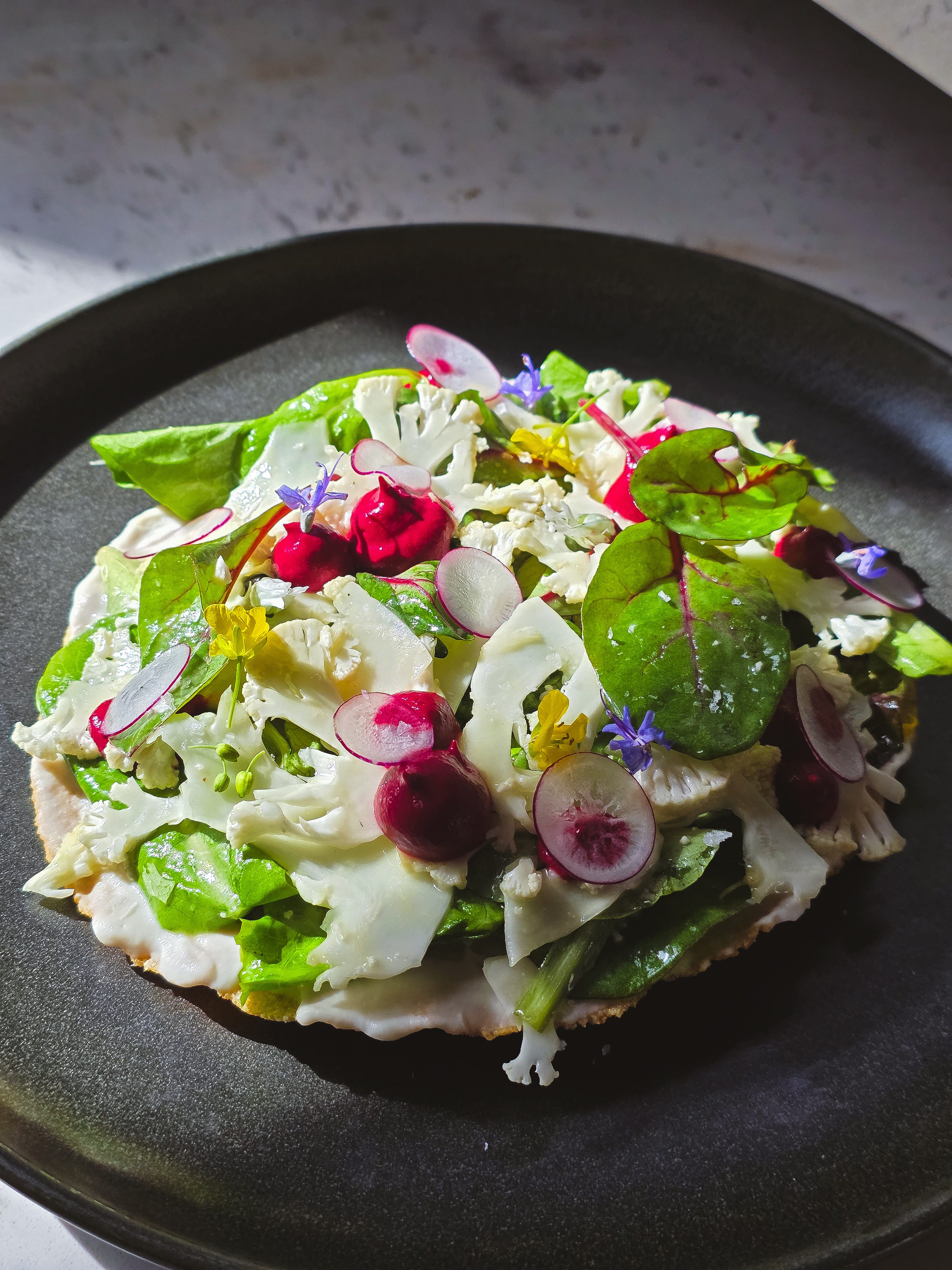
Don’t add anything that doesn’t belong. Whatever belongs, make it more beautiful. By day two, things were in order. New dishes. A beautiful tostada built around the season.
Here’s what separates us from anyone else doing this food right now: obsession and technique. The obsession with seasons; because I can turn to my peers, to Chef Juan at any moment, and say what are you working with right now, what can I borrow, what can I steal from you? That’s respect. And the technique, we have that in spades. The corn, the sourcing, what we can build from masa — you are not going to compete with us in that game. Even if you try to dress up the idea of it, put flowers around it, call it reimagined or nostalgic or elevated. It’s not the same.
The pozole came together maybe ninety minutes before service on Saturday. As soon as I tasted it, I knew: this is it. A little adjustment here. A little of that. Let’s go. It should feel familiar. Nostalgic. Clean.
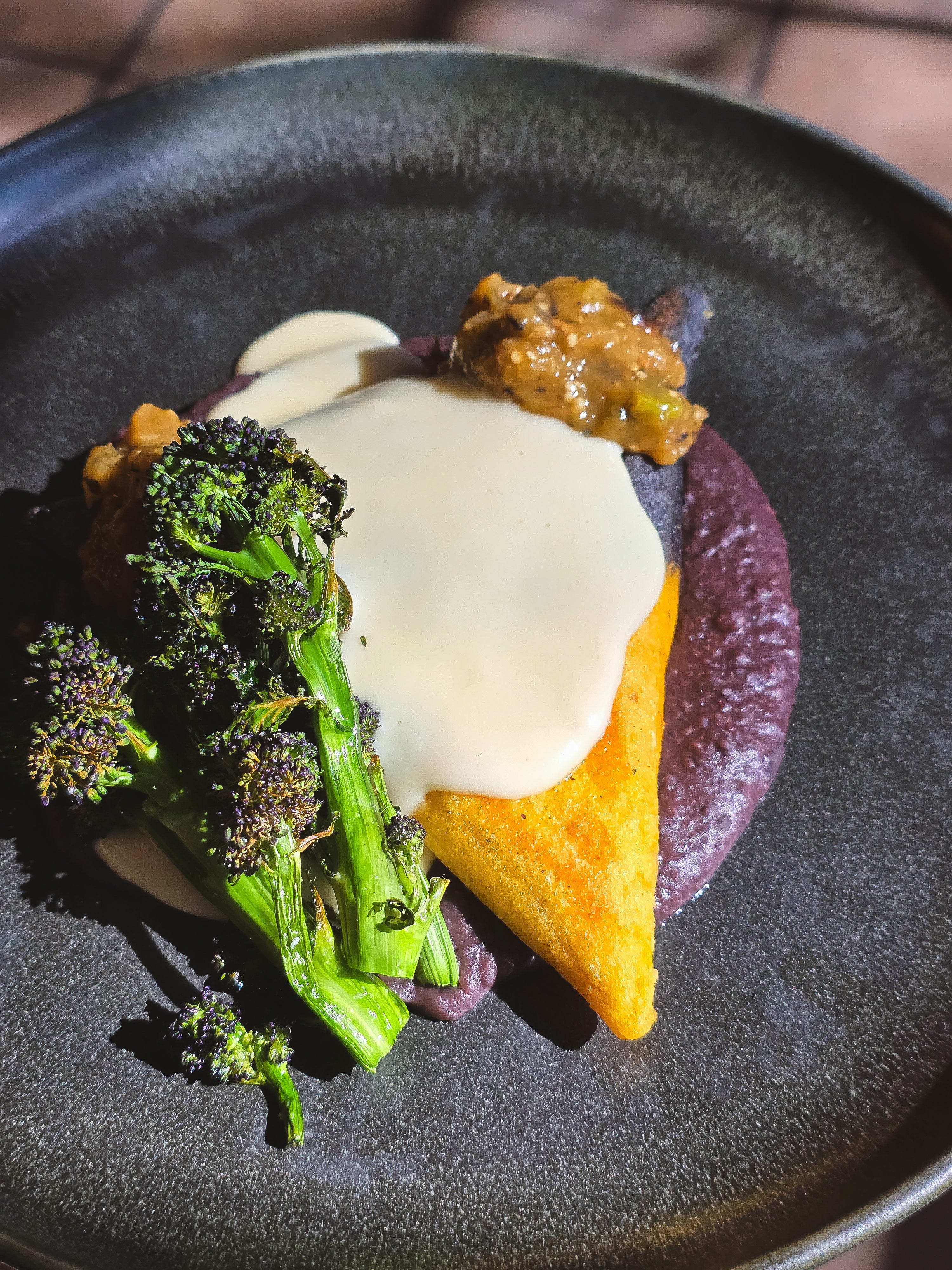
Because the corn — the maíz — is the vessel. A tlacoyo, a taco, a sope, a memelita, a tetela. All of it is a vessel. And now the work is to take everything that exists in the culture, in the history, in the way we cook, and marry it to what the season gives us. Not go searching for products that don’t belong here, that come from some large distributors food catalog or the back of a CISCO truck.
The world is your comal!
Show up to the farmers’ market at 8:45 in the morning and tell me I’m wrong. Brussels sprouts, cabbage, carrots, cauliflower, celeriac, chard, collards, fennel, kale, kohlrabi, leeks, mushrooms, onions, potatoes, raabs, french radishes, salad greens, spinach, sunchokes, turnips, scallions, truffles…
All of it becomes something you celebrate. And the moles are fun because they can be made from almost anything, if you have the imagination, the patience, and the respect for the technique and the history behind them. These things come with time. Which means that for us, they come easy
.
I don’t know how long this chapter runs. A week, two, maybe more. What I know is that it’s part of something bigger; something I’m hoping to share with you soon.
What I also know is this: it took me six months to make the pivot with the original República. This time, four days in, we’re already somewhere else. Already somewhere real.
So this is me saying: get over here. I postponed whatever I had planned for my life to give you this one more time. That’s not nothing. This is out of love for the people who supported us from the beginning, who kept saying I miss the old República — and what I’ve heard over and over these last few days is thank you for bringing it back.
That’s everything to me.
Something very special is happening right now. I’m giving you my heart — all the love, the passion, the history, the confidence, the technique, everything we built that has made us.
Do not miss it.
As the kids say: here for a good time, not a long time
.