

The Renaming
This is not Mexican cuisine

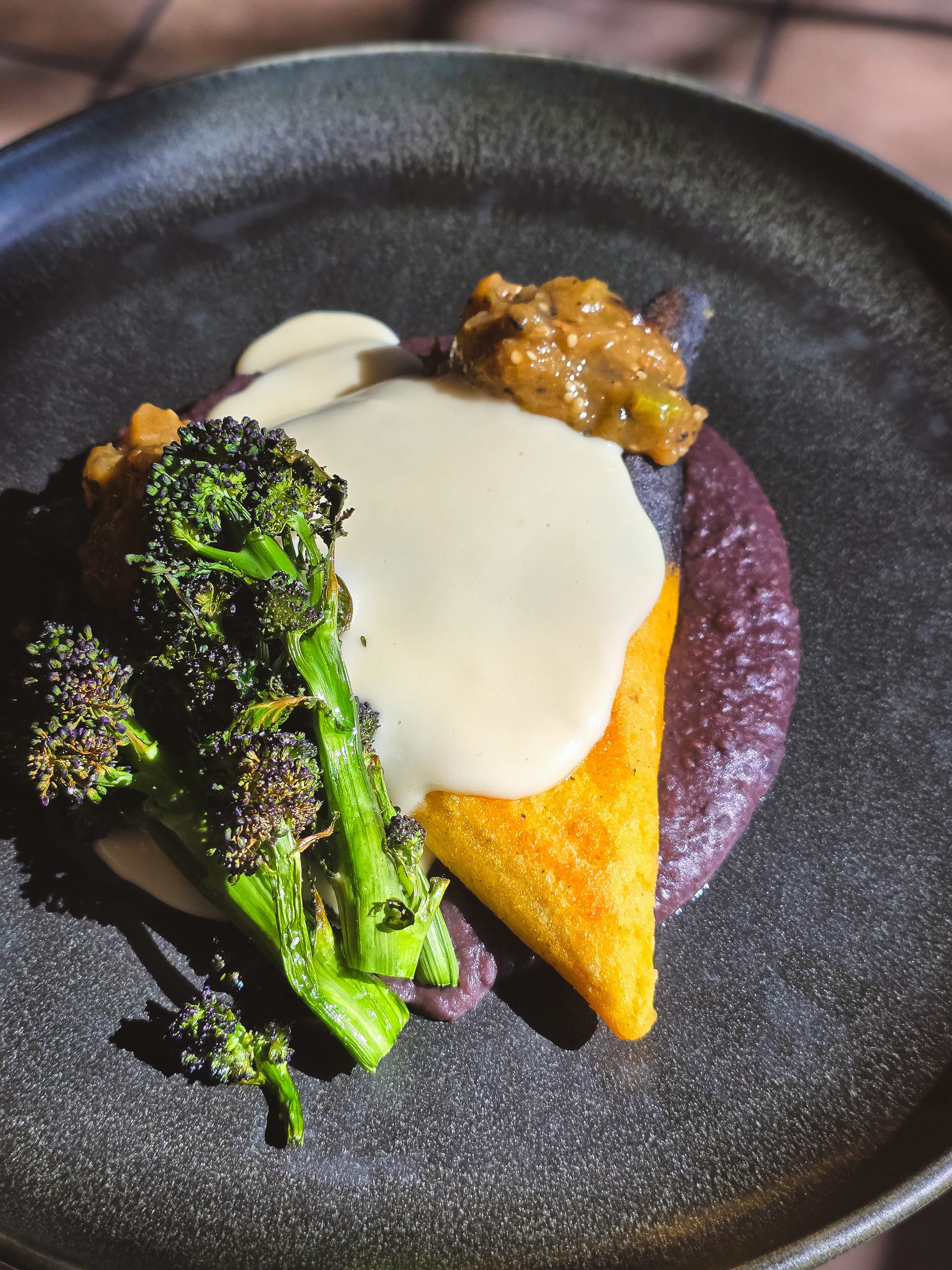
A few nights ago I was at L’Orange.
Named among the best restaurants in the country by the New York Times in 2024. My first visit was before that; late fall, early winter. Before the attention, before the list. A beautiful, cohesive menu. I left thinking: this place understands something. The food didn’t feel like most of Portland. It was doing its own thing, and I respected it.
So I went back.
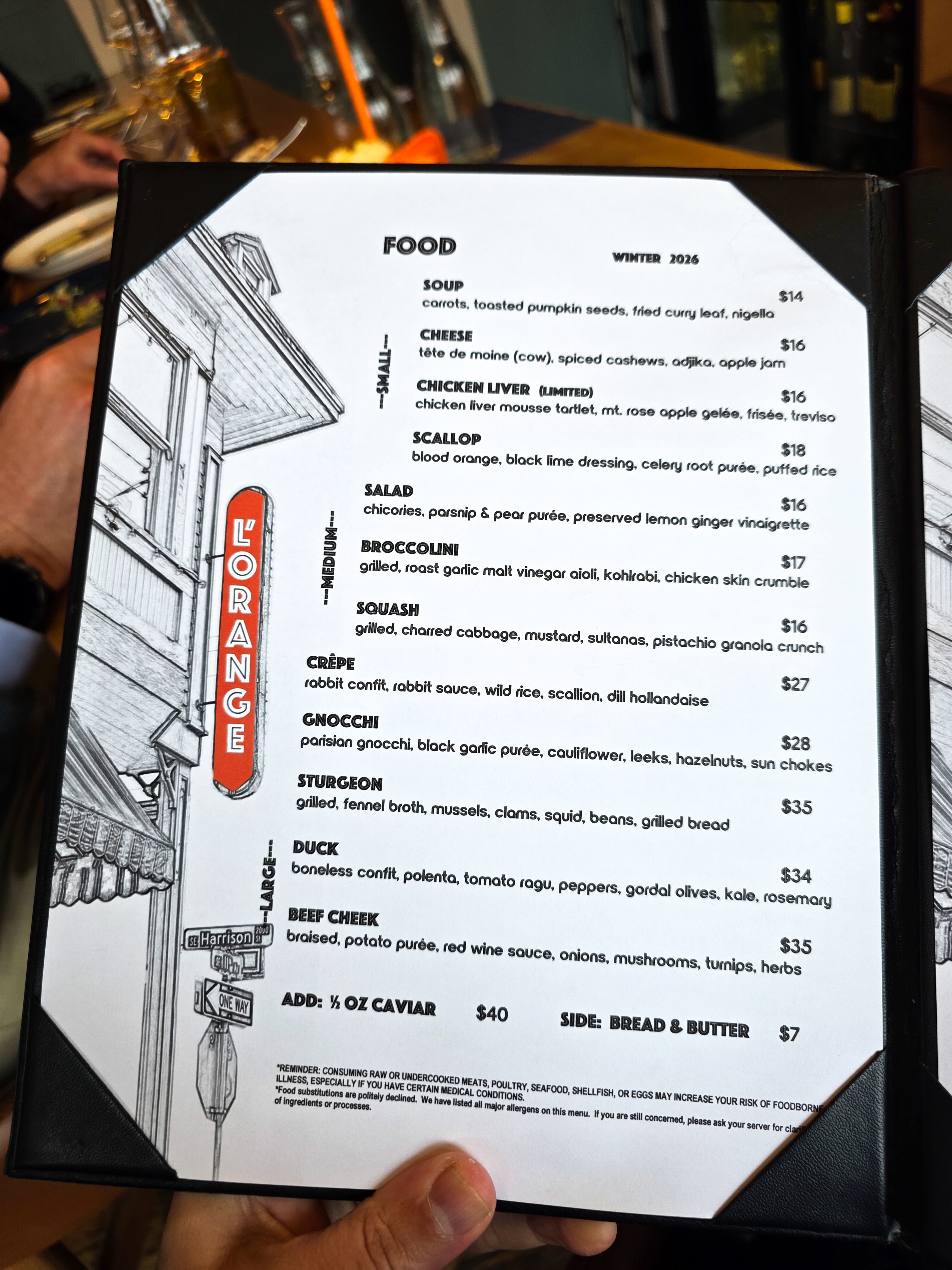
I sat down, opened the menu, and looked for the thing I always look for first. The language of the seasons. What’s alive right now. What the kitchen is paying attention to. Chicken liver. Beef cheek. Duck. Carrot soup. Chicory salad. Broccolini. Squash.
A Winter 2026 menu. Fixed. Named. Settled.
And that’s where I lost the thread — not because the food wasn’t good, it was — but because a menu that sits still for three months has already stopped asking questions. “In season” isn’t a checkbox. There are dozens of things alive at any given moment. Choosing one over the other, that’s the work. That’s authorship. That’s what separates a menu from a list.
But that wasn’t what stayed with me.
It was the gnocchi.
—
Every time they brought it out — including when they brought it to me — the server introduced it the same way. Parisian gnocchi.
And yes, I understand what that means. Flour, butter, eggs, water. No potato. Poached. Sometimes seared. Light, technical, beautiful. It was delicious.
But Parisian — that’s where it lost me.
Because before the potato ever reached Europe, gnocchi was already this. Potatoes arrived in the late 1500s and spent the next two centuries being treated as livestock feed. They weren’t cuisine. They weren’t celebrated. It wasn’t until much later that they became what we now consider the Italian standard. Before that, gnocchi — the word itself rooted in something that simply means lump, knot, small shaped mass — was made from breadcrumbs, milk, sometimes almonds.
What people now call “traditional” is actually the adaptation.
So why frame the original as the deviation? Why not call it what it is — the original gnocchi — and let that be the conversation?
Because imagine what happens when a guest hears Parisian and asks why. Now you’re talking about migration. About potatoes crossing an ocean. About how a continent had to unlearn what it knew and relearn it through someone else’s crop. Now the dish has a past. Now eating it means something.
Instead, we rename it. We distance it from itself. A small shift in language. A story told just slightly off.
And over time, that becomes the truth people believe.
This is how it starts. And this is exactly what happens to our food.
—
The problem with knowing a little bit about a lot of things — especially the history of food, migration, the way people moved and ingredients moved with them — is that it changes the way you eat. You stop just tasting. You start tracing routes. Who brought what. Who took what. Who renamed it on the way through.
You start to understand how colonizers entered from one side of an ocean and came out the other carrying ingredients, techniques, language — reshaping everything in between.
And once you see that, you can’t unsee it.
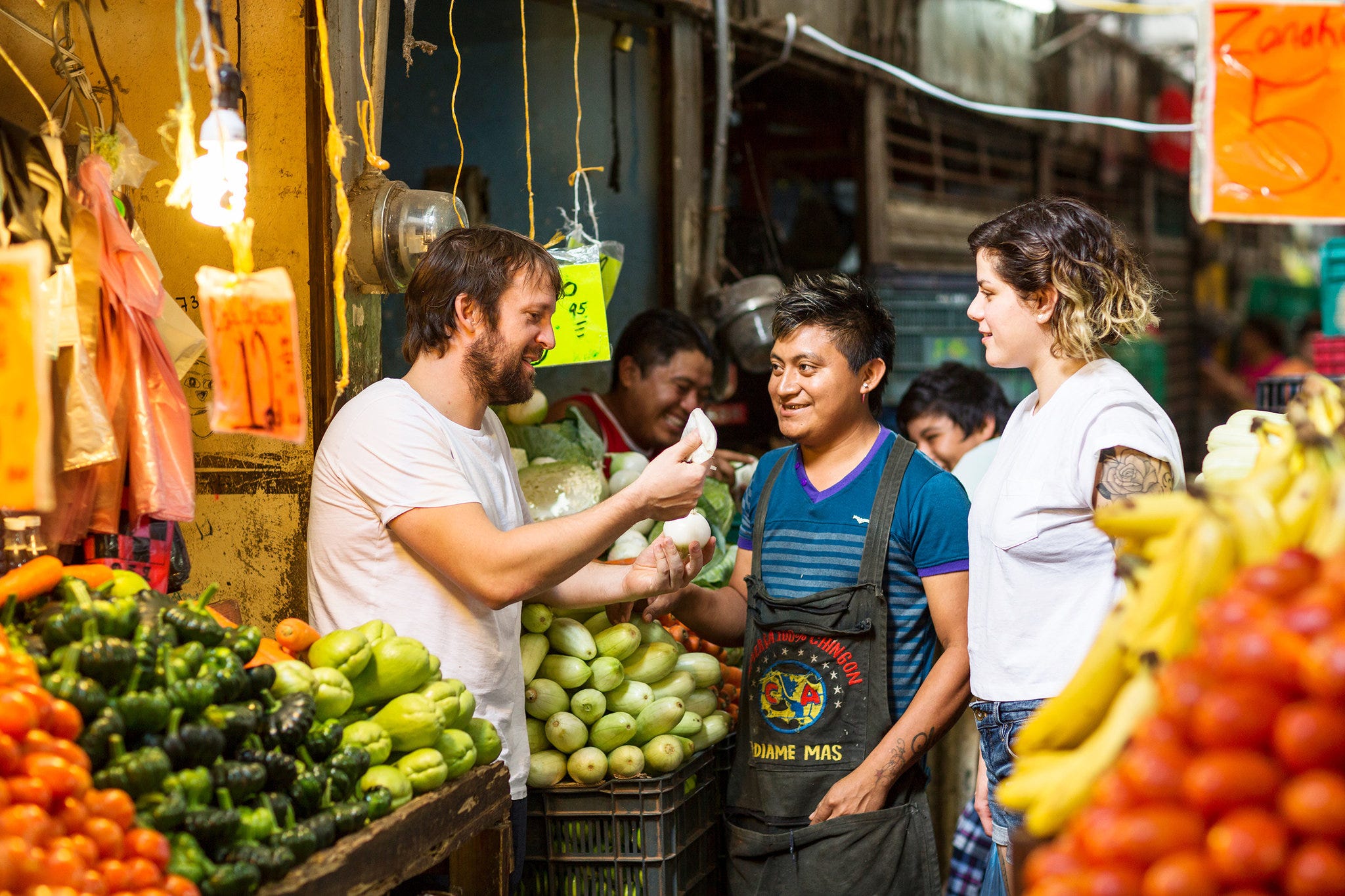
Take René Redzepi during his time in Mexico. He’s in fashion right now, which makes him easy to talk about — so let’s talk about it. Not long ago, he decided to take his Noma concept to Tulum, and in the process of it, he’s given everything: the women making tortillas, the cooks, the ingredients, the full depth of what’s actually there. One of the most influential chefs in the world, describing it, framing it. And I’ve heard him call it ancestral Mayan cuisine. Ancestral Mexican cuisine.
I struggled with that.
Take cochinita pibil. When people call it a Mayan dish, I understand what they mean. But look at the actual composition — pork, achiote, banana leaf, sour orange, finished with pickled onion — and ask the harder question: what part of that is truly pre-colonial?
The pork isn’t.
The sour orange isn’t.
Banana trees? No.
The onions, as we understand them? Also no.
Versions of it existed before — of course they did. But the dish as we know it, that specific composition, is the result of time, exchange, and contact. It earned its complexity through collision. That’s not a lesser story. That’s actually a more interesting one.
But when someone with that level of influence calls it ancestral, it becomes more than a comment. It becomes reference. It becomes citation. It becomes the thing everyone repeats until it stops being questioned and starts being fact.
—
From the very beginning, I’ve called what we do Mexico Forward.
Not Mexican-leaning. Not Mexican-adjacent. Not a category. A philosophy.
Because what people call “Mexican cuisine” is already an evolution. Pre-colonial — Toltec, Olmec, Zapotec, Maya, Mexica — then colonial contact, then what we now recognize as Mexican. And that layer alone is shaped by French technique, Italian immigration, Lebanese influence, Jewish migration, African slaves… stolen components; spices, fruits, vegetables, recipes, techniques!
All of it. Mexican cuisine is a food in motion. Mexico as a country is barely 200 years old. These ingredients, these traditions, are thousands.
So when I’m building a dish — a mole rosita, a dumpling made from corn — and someone looks at it and says gnocchi, I think: wait.
That already has a name.
Chochoyotes.
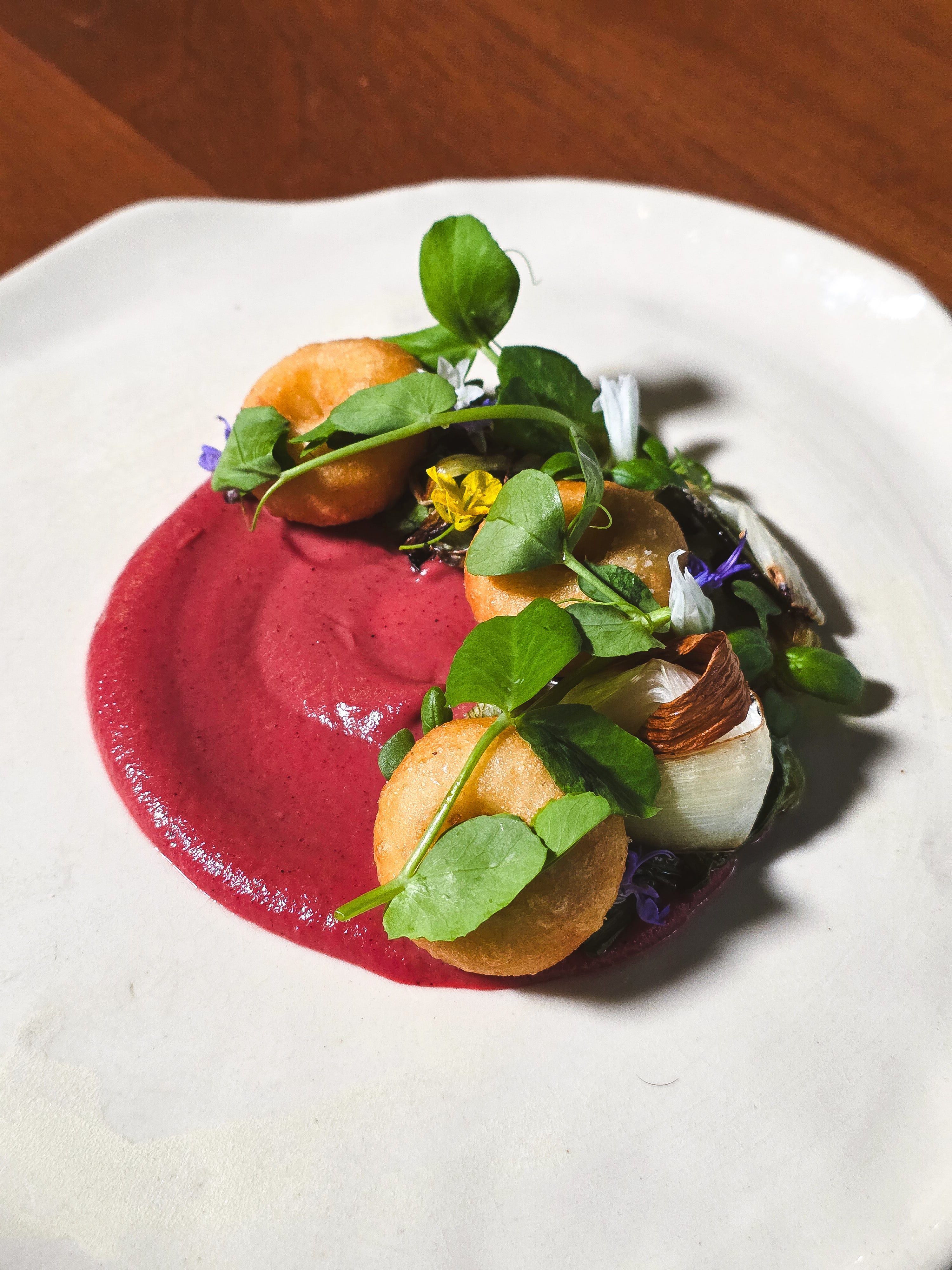
And suddenly you realize you’re not inventing anything. You’re remembering. Tracing the line back to where it actually starts — before the potato, before the renaming, before the simplification. Corn as vessel. Everything around it as expression. Seasonality not as trend or rule, but as continuation.
That’s the work. Understanding the etymology of a dish before you present it. Where it came from. What it meant. How it changed and why.
—
Outside the main cities — in both the U.S. and Mexico — there are still communities living directly off the land. The first time I really understood that was on my first visit to Merida, in Yucatán. Still Mexico, but nothing about it felt familiar. The spices, the sauces, the habaneros on everything. The way they use recado negro with duck. Things I had never tried. Some of them felt like I’d been eating them my whole life. Others made no sense at all. The further out you go, the more you find things that never made it into a cookbook — food shaped entirely by what the land will give that morning. No menu. No fixity. Just necessity and instinct.
When my parents came to this country — like so many others — they didn’t have access to that land. No farms. No markets. No direct line to what they’d always cooked from. So they adapted. They cooked with what was available, with what they could recreate. Mass-processed components. To this day, you’ll find Mexican restaurants serving store-bought tortillas, Monterey Jack or yellow cheese over beans, shredded lettuce on the plate, and a wedge of orange on the side. I still don’t know who decided that was the standard.
Over 45 years of watching my mother cook from memory, using whatever was available to her, the line began to blur. It became its own version of Mexican cuisine. There’s beauty in that. But there’s also distance.
Right now you’re starting to see a shift. Young chefs in this country looking back, trying to reconnect with origin, often by force than by instinct. Many attempting to cook from memory. From nostalgia. Only that nostalgia comes from a week in Mexico City and no where else. Some will site their childhood afternoons at a food stall. A version of home that no longer exists the way they remember it. That’s not wrong on its own — until the language shifts. Until someone calls it ancestral. Until someone calls it authentic. Until you have to stop and say: this food has been around longer than you have. Acknowledge it.
I’ve been guilty of that too. We all have.
But I’ve been fortunate enough to travel, to eat, to see; and to understand that honoring something isn’t the same as recreating it. You’re not cooking Hidalgo in Portland. You’re not making food the way the Otomí make it, walking the land before dawn with whatever the earth will give that day. That necessity, that immediacy; you can’t replicate it here.
But you can respond to your own version of it.
For me, that happens at the market. It happens when I look at what’s in front of me and ask: what’s alive right now? What makes sense? What belongs together?
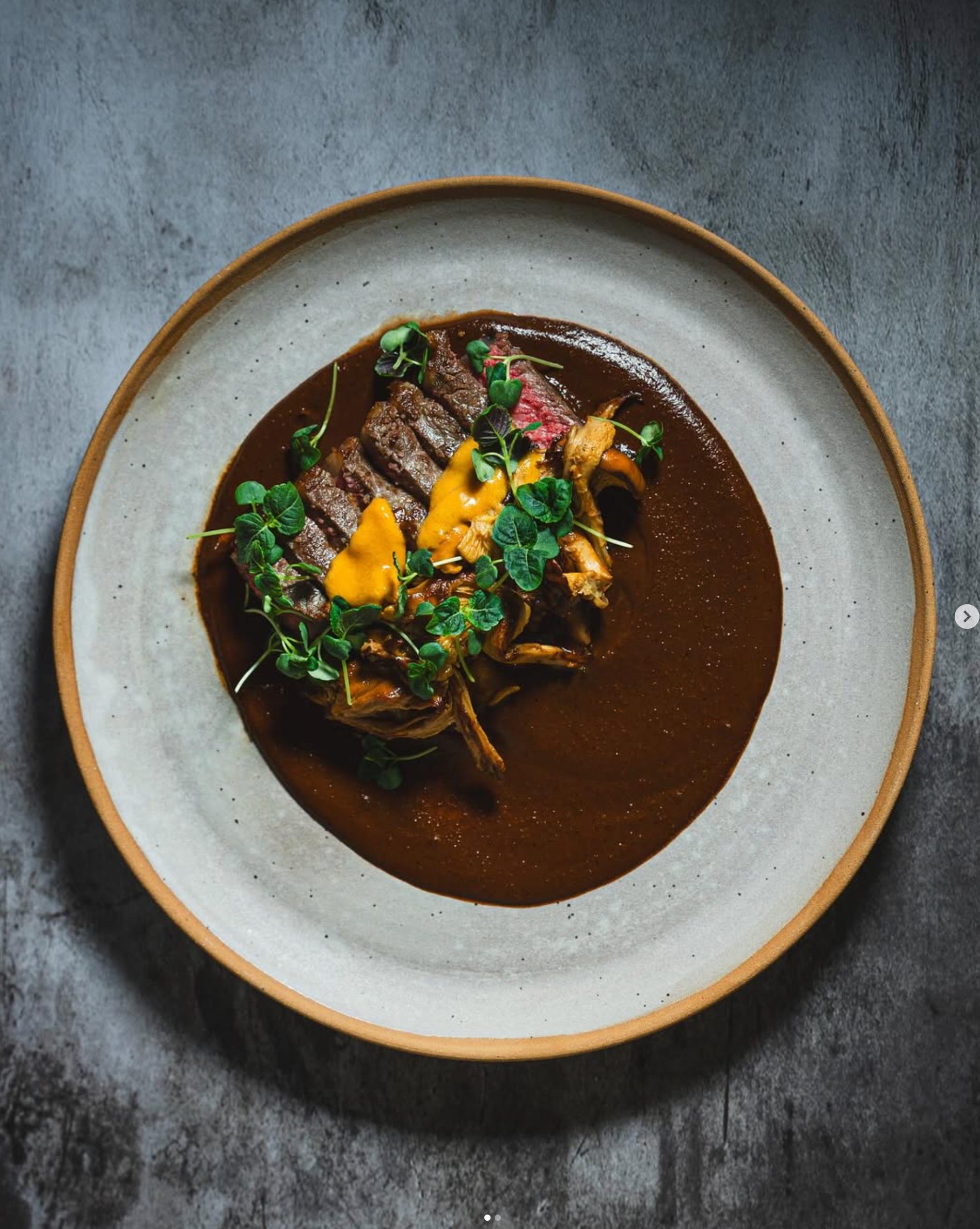
Give me freshly harvested sea urchin.
Place it on a beautiful medium-rare steak.
Lay that steak over a complex mole negro.
Add some locally harvested morels and some greens.
Serve it with tortillas.
That’s not confusion. That’s evolution. And I wouldn’t call it Mexican.
I’d call it Mexico Forward.
The mole, the corn, the technique — those roots go far beyond Mexico as a concept. Far beyond any label that fits on a menu or gets repeated until it hardens into fact.
Maybe I’m a romantic. But when I look at corn, I don’t think Mexican tortillas. I think about the Toltec women, the Olmecs, the Zapotecs, the Maya, the Mexica. Civilizations that would have no idea what the word Mexican even means. I think about the generations of selective cultivation — separating, grafting, repeating — until they gave us a grain that feeds not just this side of the world, but all of it. That is the origin. That is what we’re working from.
Before anything leaves the kitchen, it has to be understood. Not just executed. Understood. Because what we’re doing isn’t preserving something frozen in time. We’re continuing it. And there’s a responsibility in that — to the lineage, to the people who never got the credit, to the names that were renamed on the way through.
A root pulled from nearby soil will always taste more honest than something that traveled across the world to reach your plate. That’s not limitation. That’s clarity.
The seasons will tell you what to cook, if you’re willing to listen. The land will tell you what it has, if you’re willing to ask.
Mexico Forward. Not a label. Not a category.
A way of cooking. A way of thinking. A path back to the original — before the renaming, before the deviation, before someone called it Parisian.
Back to the lump. The knot. The small shaped mass.
Back to where it actually starts.
Man, this is a phenomenal piece. It deserves a massive audience