

This Is the Hill You Chose?
Portland's foie gras ban reveals a leadership class more interested in performance than governance

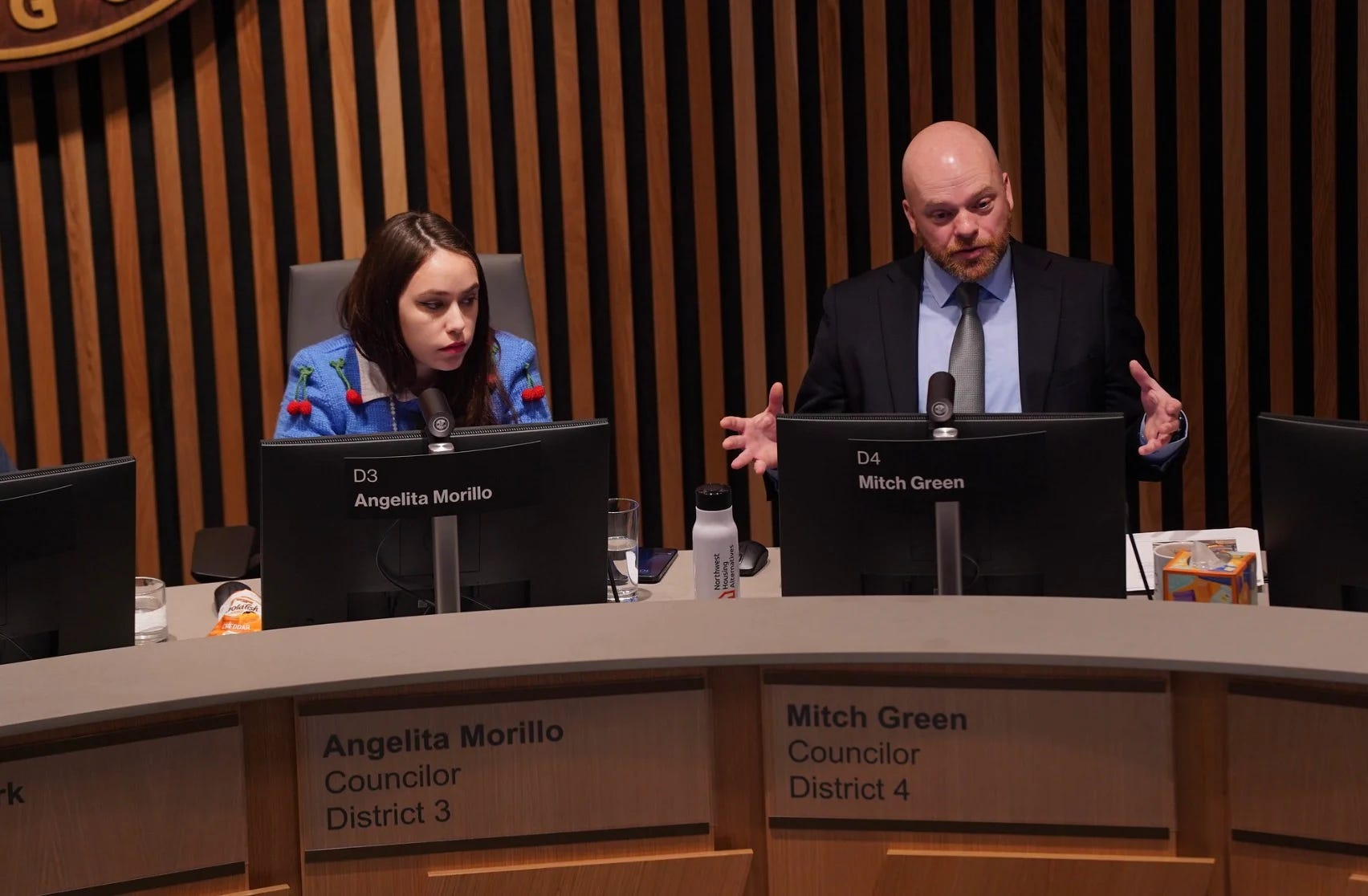
Today, Portland City Council is set to hear testimony on a proposed ban on the sale of foie gras produced through force-feeding. We’ll hear from both sides. Animal-welfare advocates. Chefs. Restaurateurs. Policy folks. The whole ritual.
Let me be clear before anyone decides what box to put me in: As a restaurateur, I don’t care about foie gras enough for this to be the moment we’re in.
Yes, we may have served it once or twice over the years. Yes, I understand the ethical arguments on both sides. If you want a thoughtful, nuanced exploration of that debate, read Mike Thielen’s piece on the subject. It’s smart. It’s informed. It does the issue justice.
This isn’t about whether foie gras should be served.
It’s about why this is what Portland leadership is choosing to focus on right now.
A City in Crisis, a Council Playing Pretend
We are not in a normal moment for Portland restaurants. We are not in a vibes crisis. We are in a real, measurable collapse.
International tourism to Oregon dropped sharply in 2025. Canadian visitor spending—once a backbone of Portland’s hospitality economy—fell by roughly half during peak summer months. That’s not a trend. That’s a cliff.
Portland has fallen more than 60 places in the Milken Institute’s Best-Performing Cities ranking. That reflects weak job growth, housing pressure, and economic stagnation. Not perception. Reality.
Homelessness in the Portland metro area has grown by more than 60% in just two years. The city still hasn’t figured out how to align shelter availability, enforcement, and long-term housing solutions. It’s not complicated policy paralysis. It’s basic governance failure.
And while we’re watching all of this burn, City Council is spending time, energy, and political capital on foie gras.
Safety Is Not a Side Issue
For people like me—and for many of my peers—this moment is about more than margins and foot traffic.
It’s about the safety and dignity of our people.
Fear of immigration enforcement has already led to canceled events and visibly lower turnout at public gatherings in Portland. Communities are staying home. Families are opting out. That has real cultural and economic consequences—consequences that show up in empty dining rooms and in the anxiety of staff who don’t know if they’re safe.
Business owners are openly worried that increased federal presence; whether National Guard deployments or other interventions could further chill recovery and push visitors away from downtown altogether.
So when I watch City Council devote time, oxygen, and political capital to foie gras, I have to ask: Who is this for?
Who, exactly, is being served by this performance?
Morality Without Proportion Isn’t Leadership—It’s Cosplay
This vote affects fewer than ten restaurants. The vast majority of businesses publicly endorsing the ban don’t serve foie gras at all.
Which makes this what it truly is: a symbolic act.
Symbolic acts aren’t inherently bad. Symbols matter. But symbolism without proportion—without urgency, without context—stops being leadership and starts being performance art.
This feels like governance by people who have never sat across the table from someone like me or my peers. People who haven’t had to make payroll during a tourism collapse. Who haven’t watched their staff disappear from public spaces out of fear. Who haven’t carried the weight of keeping people safe while the ground shifts beneath them.
Instead, they govern from a morality that makes sense to them—one that fits comfortably in a press release and plays well with a narrow constituency—rather than one that serves the city as a whole.
And let’s be honest about what this really is: It’s cheap. It costs them nothing. It requires no difficult trade-offs, no budget reconciliation, no confrontation with entrenched interests. It’s the political equivalent of ordering the salad so you can feel virtuous while the building burns down around you.
This Is Not Leadership
A city facing economic contraction, rising homelessness, declining tourism, and cultural fear does not need its leaders posturing over luxury ingredients.
It needs focus. It needs triage. It needs seriousness.
It needs leaders who understand that when you’re hemorrhaging jobs, losing tourists, and watching communities retreat out of fear, you don’t get to spend your political capital on feel-good votes that affect a handful of restaurants.
You certainly don’t get to pat yourself on the back for it.
Choosing this as the hill to die on—right now, in this moment—signals a leadership class that is fundamentally disconnected from the material reality of the people they’re supposed to serve. It signals leaders who are more interested in moral performance than in doing the hard, unglamorous work of actually governing a city in crisis.
And that should worry all of us.
Because if this is what they think leadership looks like, we’re in deeper trouble than I thought.